You walk outside and notice the water level in your pool seems lower than yesterday. You top it off, but a few days later it drops again. Sound familiar?
If your pool is losing water faster than normal, you probably have a leak. The good news is that finding the source does not have to be a mystery. Whether the problem is a crack in the shell, a plumbing leak underground, or a loose fitting at the pump, there are clear steps you can take to find a pool leak and get it fixed before it turns into a bigger problem.
This guide covers the common signs of a leak, DIY methods you can try at home, and when to call a professional pool leak detection company to find and fix a leak for good.
Common Signs Your Pool Is Leaking
Before you start hunting for the leak, it helps to confirm that you actually have one. Pools naturally lose some water due to evaporation, splash out, and backwash. In Southwest Florida, a pool can lose about a quarter inch per day from evaporation alone.
But if you are seeing any of these obvious signs, you likely have a real leak in your pool:
- The pool's water level drops more than a quarter inch per day, even when the pool is not in use
- You are constantly adding water or your automatic fill device runs nonstop
- Wet spots or standing water appear in the yard near the pool area or equipment pad
- Cracks in the pool deck or bond beam (the top edge of the pool wall)
- Algae keeps coming back despite proper chemical balance
- Your water bills keep climbing without any other explanation
- Air bubbles in the return line or jet when the pool pump is running
- Loose connections or wetness around the pool pump, filter, or chlorinator
If you notice one or more of these warning signals, it is time to find out exactly where the water is going.
Step 1: Rule Out Evaporation With the Bucket Test
The very first thing every pool owner should do is the bucket test. This simple method tells you whether your pool is losing water due to evaporation or a leak.
Here is how to do it:
- Fill a bucket about three quarters full with pool water
- Set the bucket on the pool step so it sits partly in the water
- Mark the water level inside the bucket and the pool water level on the outside of the bucket
- Wait 24 hours without using the pool
- Compare the two marks the next day
What the results mean:
| Result | What It Means | Next Step |
| Both levels dropped equally | Normal evaporation, no leak | No action needed |
| Pool level dropped more than bucket | You have a leak | Move to Step 2 below |
| Pool level dropped much more (1+ inch per day) | Significant leak present | Call a leak detection company right away |
Once you have ruled out evaporation, you know there is a real problem. Now it is time to narrow down where the leak is.
Step 2: Check the Pool Equipment Area
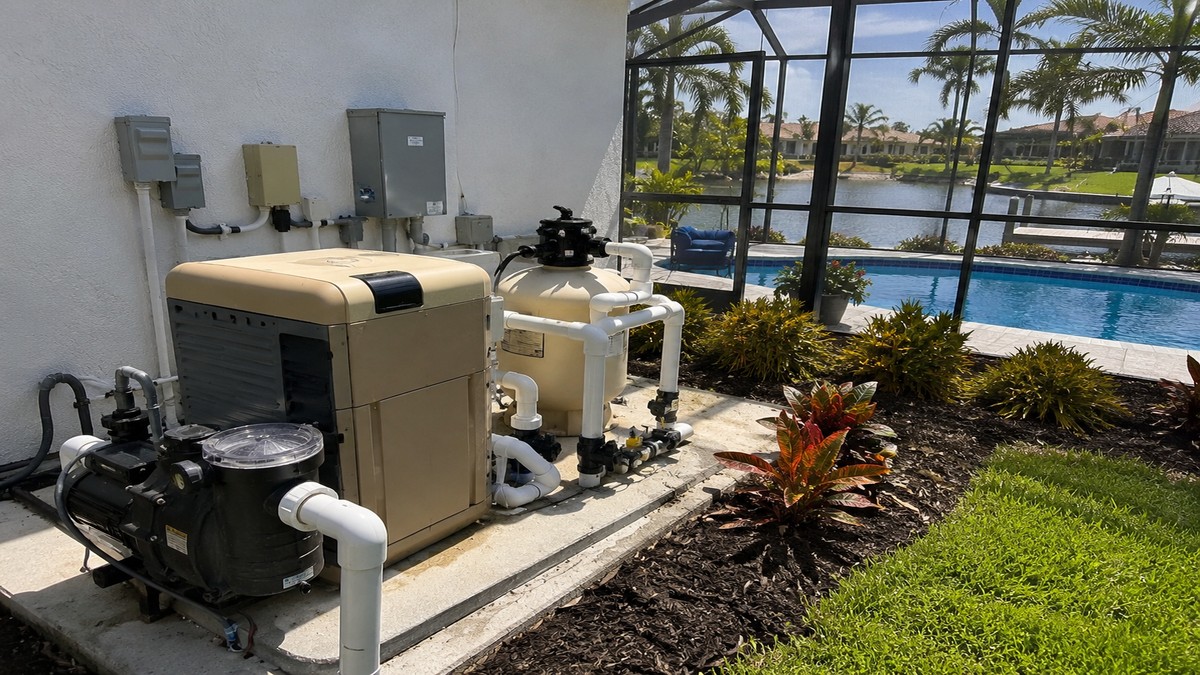
Many water leaks start right at the equipment pad, and they are often the easiest to find. Walk around the pool pump, filter, heater, and chlorinator. Look for:
- Dripping water at pipe connections or fittings
- Wet ground or excess water pooling around the pool pump area
- Corroded or cracked o-ring seals on the pump lid or filter housing
- Loose connections at union fittings or valves
If you spot water around the equipment, the fix may be as simple as tightening a fitting, replacing an o-ring, or resealing a connection. These are straightforward leak repairs that a professional pool service can handle quickly.
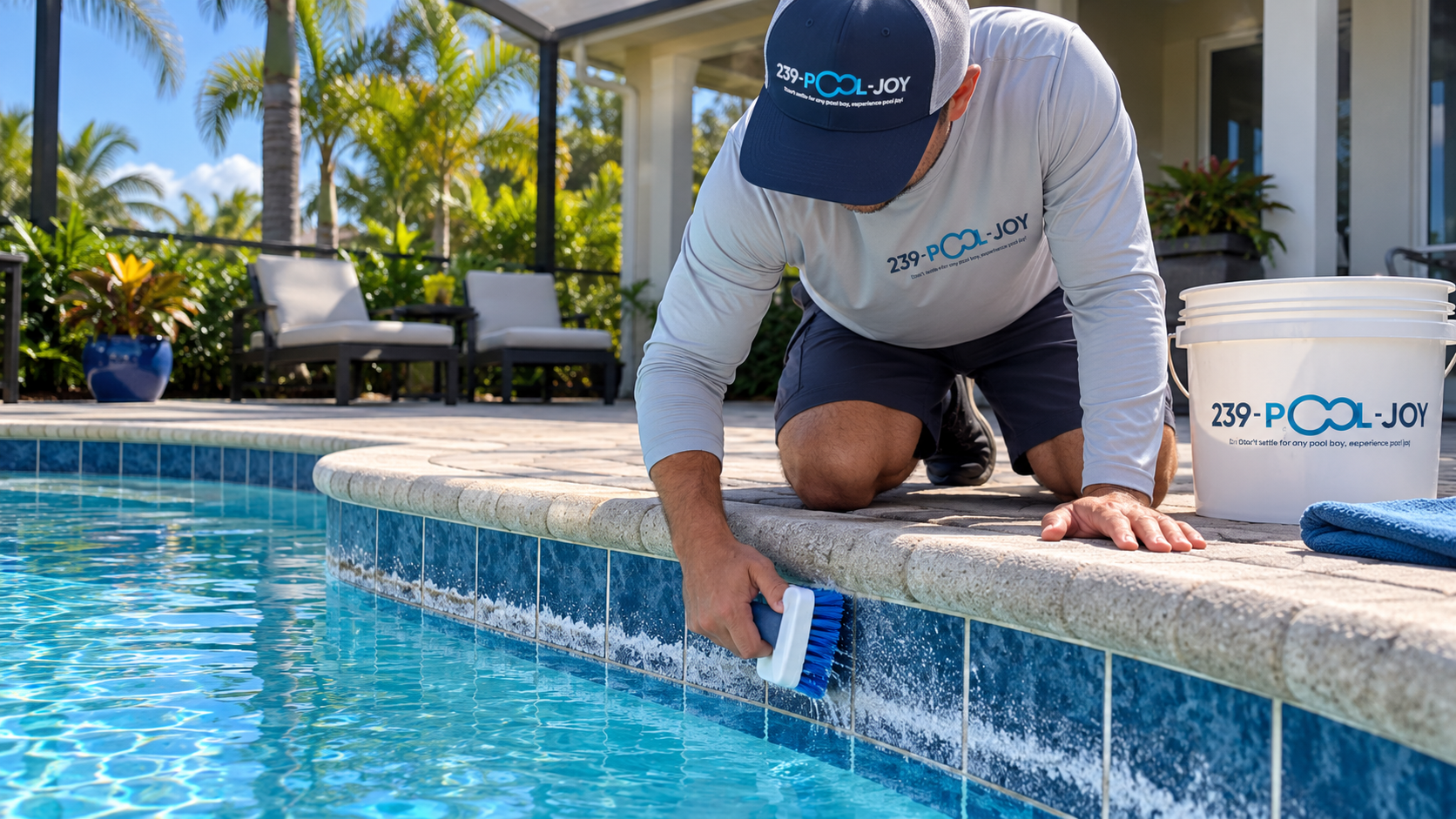
Step 3: Inspect the Pool Shell and Vinyl Liner
Next, get in the pool (or look carefully from the deck) and examine the interior surface. What you are looking for depends on your type of pool:
For a concrete pool or plaster pool:
- Hairline cracks in the plaster or along the floor
- Gaps where the skimmer meets the pool wall
- Separation at the tile line or bond beam
- Cracks around the light fixture, return line, or jet fittings
For a vinyl liner pool:
- Small tears, holes, or punctures in the liner
- Areas where the liner has pulled away from the wall or floor
- Wrinkles that could hide a tear underneath
Even small damage to a vinyl liner or concrete pool shell can cause significant water loss over time. If you spot a tear in a liner, a temporary patch with waterproof tape can slow the leak until a proper repair is completed. For plaster repair on a concrete pool, you will want a professional to handle it.
Step 4: Use Leak Detection Dye to Pinpoint the Source
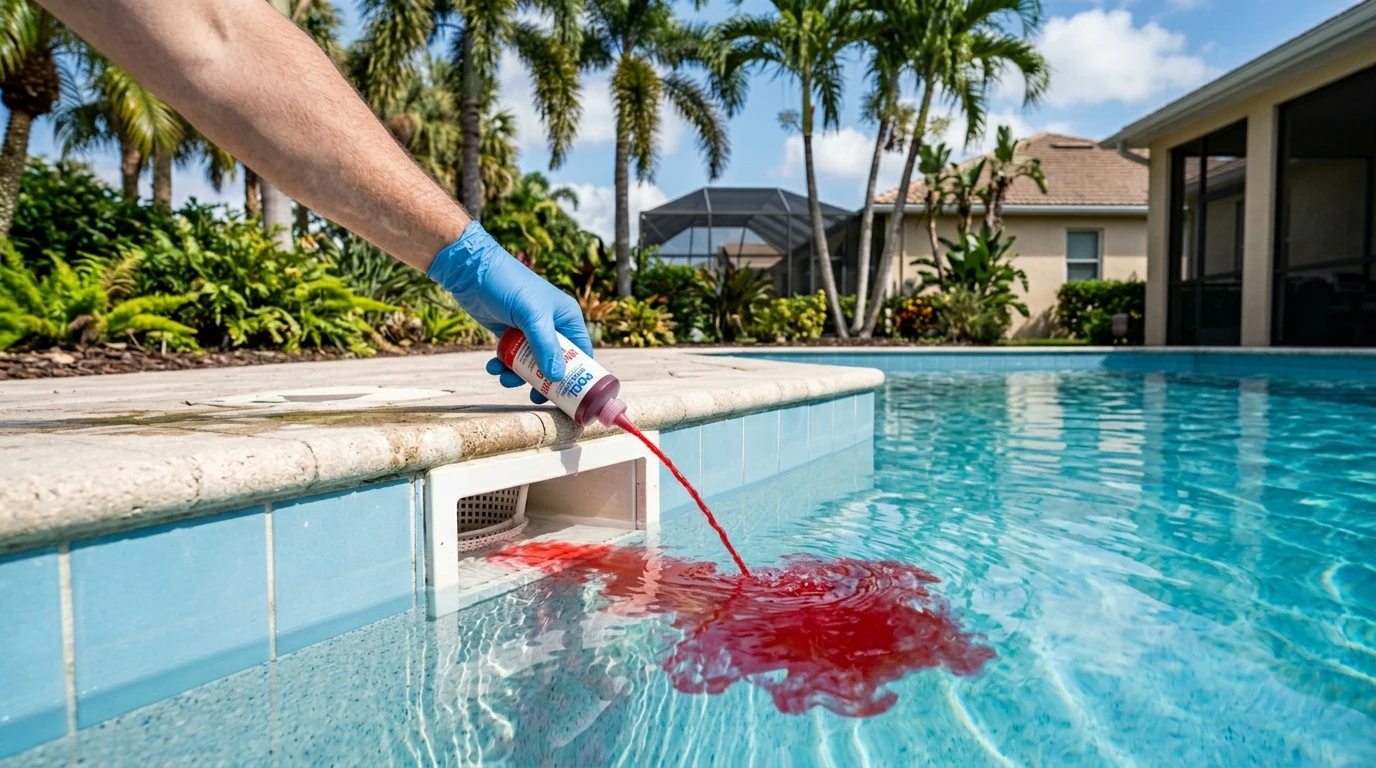
One of the most effective DIY methods to find the leak is the dye test. You can purchase leak finder dye (also called leak detection dye) at most pool supply stores. It comes in a small squeeze bottle, usually in red or dark blue.
How to perform a dye test:
- Turn off the pool pump so the water is completely still
- Get close to the area you suspect is leaking
- Slowly squeeze a small amount of dye into the pool water near the suspected spot
- Watch carefully. If there is a leak, the dye will get pulled toward and into the crack, fitting, or opening
This works well for testing around the skimmer, return line, light fixtures, and any visible cracks. The key is patience. The water must be calm, and you need to release the dye very close to the suspect area.
Pro Tip: Test your pool at different water levels. If the water loss stops at a certain pool level, the leak is likely at or just above that point. This can help you narrow down the location before using dye.
Step 5: Test the Plumbing Lines
If you have checked the equipment, shell, and fittings but still cannot find the leak, the problem may be in the underground plumbing. Leaks in buried pipes are the hardest to find on your own because the plumb lines run beneath the pool deck and yard.
Signs of a plumbing leak include:
- Water loss that continues even when the pump is off AND when it is running (though the rate may change)
- Soggy or eroded areas in the yard between the pool and equipment
- The pool settles or shifts over time due to soil washout
Finding a leak in the underground plumbing requires a pressure test. This involves plugging the plumbing lines and pressurizing them with air or water to see which line is losing pressure. This is specialized work that should be handled by a certified leak detection company with the right tools and experience.
When to Call a Professional Leak Detection Company
DIY methods are great for spotting the obvious signs and sometimes even finding the exact source. But there are situations where a professional pool leak detection service is the smart move:
- You have done the bucket test, ruled out evaporation, and still cannot find the leak
- The leak appears to be in the underground plumbing
- You have an inground pool with complex plumbing and multiple return lines
- The water loss is significant (more than an inch per day)
- You see damage around your pool but are not sure where the water is coming from
A professional leak detection company uses advanced tools that go far beyond what a pool owner can do at home. These include electronic listening devices that pick up the sound of water escaping through pipes, pressure testing equipment, camera inspection systems, and professional grade leak detection dye.
How 239-POOL-JOY Finds and Fixes Pool Leaks
At 239-POOL-JOY, we have been helping pool owners in Naples and Ave Maria, FL find and fix leaks for over 20 years. Our team holds a Certified Pool Leak Detector credential, and we use a proven process to locate every leak quickly and accurately.
Our pool leak detection services include:
- Pressure testing every plumbing line to isolate the problem
- Electronic listening devices to detect water movement underground
- Dye testing at every fitting, skimmer, return line, and jet
- Full visual inspection of the pool shell, deck, equipment, and pool area
Once we find the leak, we also provide leak repair services. Whether the fix requires a plaster repair, a pipe patch, a fitting replacement, or a more involved structural repair, we handle it start to finish.
| Detection Method | Best For | DIY or Professional |
| Bucket Test | Confirming a leak exists | DIY |
| Visual Inspection | Cracks, wet spots, loose fittings | DIY |
| Dye Test | Pinpointing shell and fitting leaks | DIY or Professional |
| Pressure Test | Underground plumbing leaks | Professional |
| Electronic Listening Devices | Buried pipe leaks | Professional |
How to Prevent Future Leaks
Once you find and fix a leak in your pool, the last thing you want is another one. Here are some simple steps to help prevent leaks in the future:
- Schedule regular pool maintenance to keep water chemistry balanced and equipment in good shape
- Get an annual inspection so small issues are caught before they grow
- Keep an eye on your water level and note any changes week to week
- Do not ignore small cracks in the pool shell, deck, or around your pool equipment
- Upgrade aging plumbing if your inground pool is more than 15 to 20 years old
Leaks can happen in any pool, whether it is brand new or decades old. The key is catching them early and working with a company to find the source fast.
Stop the Leak Before It Gets Worse
A leaking pool does not fix itself. Every day you wait, more pool water escapes, your water bills climb, and the risk of structural damage increases. The sooner you find a leak and get it repaired, the more money and headaches you save.
If your pool is losing water and you are not sure where it is going, the team at 239-POOL-JOY is ready to help. We proudly serve pool owners across Naples and Ave Maria, FL with expert pool leak detection, pool inspections, cleaning, and equipment repair services.
Call us today at (239) 766-5569 or contact us online to schedule your pool leak detection appointment. Let us find and fix the problem so you can get back to enjoying your swimming pool and spa.
Related Services from 239-POOL-JOY