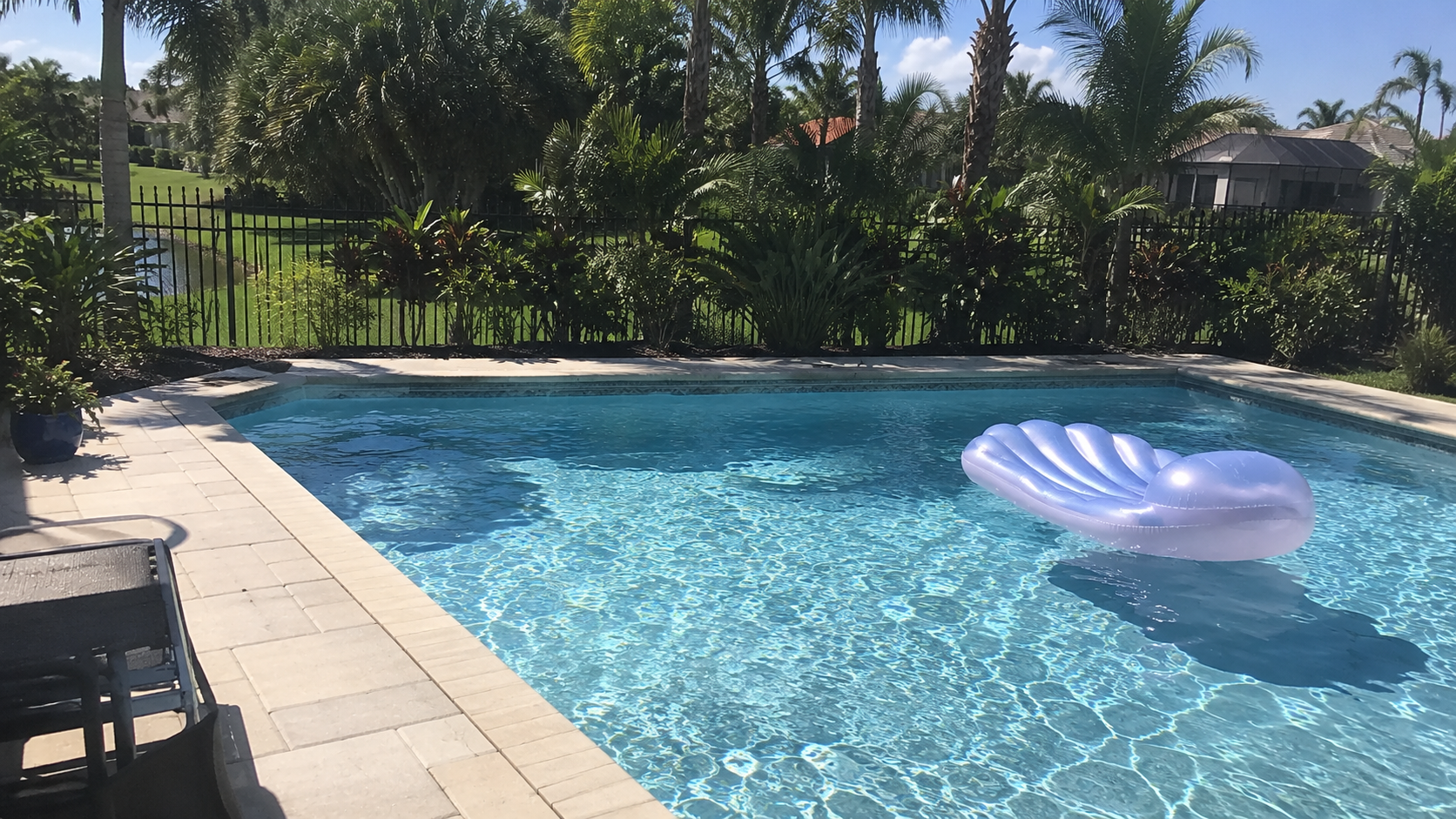
What Naples HOAs and condo boards should expect from commercial pool cleaning, from chemistry logs to Florida rules.
July 14, 2026


If your pool turns green faster than you can balance the chemicals, you are not imagining it. Pool algae prevention in Naples comes with a challenge most of the country never deals with. That challenge is humidity. At 239-Pool-Joy, we see the same pattern every summer across Naples and Ave Maria. Homeowners treat an algae bloom, feel relieved for a week, and watch it come right back. Here is why that keeps happening and what actually breaks the cycle.
Algae needs three things to grow. It needs warmth, sunlight, and moisture in the air around the pool. Southwest Florida delivers all three at levels most regions never see, especially between May and October.
High humidity slows evaporation, which sounds like a good thing. However, it also means chlorine breaks down differently here. It evaporates more slowly, but breaks down faster through UV exposure and heat. That combination throws off the balance homeowners expect from cooler climates. Standard chlorine dosing advice from national pool brands often does not account for this. That mismatch is a major reason algae keeps returning even when homeowners are technically following the instructions on the bottle.
Not all algae responds to the same treatment. Knowing which type you have saves time and chemical costs.
1. Green algae is the most common and spreads fastest in warm, humid conditions
2. Yellow or mustard algae clings stubbornly to pool walls and resists standard chlorine shock
3. Black algae has root systems that penetrate plaster and requires more aggressive treatment
Green algae usually responds to a standard shock treatment within a day or two. Yellow and black algae almost always need brushing combined with algaecide, not chlorine alone.
Many Naples homeowners assume a strong enough shock treatment solves algae for good. In most SW Florida pools, that assumption falls apart within a week or two.
The reason comes back to humidity again. Constant moisture in the air keeps surfaces around the pool damp longer. Algae spores travel easily through that moist air onto nearby surfaces. Rainstorms, which are frequent here, wash organic debris into the pool that acts as algae food. A single treatment addresses the algae you can see. It does not address the spores waiting in the air and water around your pool. That is the core reason ongoing prevention matters more here than in drier climates.
Prevention beats treatment every time, especially in this climate. Real pool algae prevention in Naples depends on a handful of consistent habits, not a single big treatment.
Do not let chlorine dip low between treatments, even for a day or two. In Naples heat, a chlorine gap of just 24 to 48 hours is often enough. That short window gives algae spores time to take hold and multiply.
Algae often starts as a thin film invisible to the eye before it blooms into visible green or black patches. Weekly brushing physically disrupts early growth before it becomes a problem you can see.
Ave Maria and Naples both see heavy afternoon storms for months at a time. Extending filter run time during these months helps clear that debris out faster. This gives algae less time to feed on what the rain washes in.
Phosphates act as fertilizer for algae, and they build up from rainwater, fertilizer runoff, and even sunscreen. Testing phosphate levels seasonally, not just chlorine and pH, catches a hidden cause many homeowners never think to check.
If your pool runs a salt chlorine generator, algae prevention works a little differently than it does with traditional chlorine. Salt cells produce chlorine steadily. But they can struggle to keep pace during Naples's peak algae season if the cell is undersized or aging.
Check your salt cell output during the hottest months. If you notice algae creeping in despite normal salt readings, look at the cell first. It may simply not be producing enough chlorine to keep up with summer demand, even if your water balance looks fine on paper.
Some algae problems go beyond what a homeowner can reasonably fix with store bought products. Black algae, in particular, often requires professional grade treatment because of how deeply it embeds into plaster and grout lines.
If you have tried shock treatment and brushing multiple times without lasting results, pay attention to that pattern. It usually means the algae has taken hold in a way that needs professional attention. Continuing to buy more chemicals at that point often wastes money without solving the underlying problem.
A Seasonal Checklist for Naples and Ave Maria Pool Owners
* Test phosphate levels at the start of each rainy season, not just chlorine and pH
* Brush pool walls and steps weekly, even without visible algae present
* Extend filter run time during peak storm months from June through September
* Inspect your salt cell output monthly if you run a saltwater system
* Call a professional if algae returns within a week of treatment more than once
A few habits actually feed the problem instead of solving it. Overdosing algaecide is one of the most common. More product does not mean faster results, and excess algaecide can throw off your chlorine demand instead of helping.
Ignoring your pool filter is another common mistake. A dirty filter recirculates the exact organic material that algae feeds on, undoing the benefit of any chemical treatment. Rinsing or backwashing your filter regularly matters just as much as the chemicals you add to the water.
Treating algae only after it becomes visible is the third mistake worth mentioning. By the time algae is visible, it has usually been growing beneath the surface for days. Waiting for visible signs before acting is part of why the cycle keeps repeating for so many Naples homeowners.
Humidity in Naples and Ave Maria keeps algae spores active in the air and on nearby surfaces even after a shock treatment kills what is visible in the water. Consistent chlorine levels, weekly brushing, and phosphate testing address the ongoing exposure that shock treatment alone cannot.
Green algae is the most common and usually responds to standard shock treatment. Yellow or mustard algae resists chlorine and needs brushing plus algaecide. Black algae has root systems in plaster and typically requires professional treatment to fully remove.
Testing phosphate levels at the start of rainy season, then again mid season, catches buildup early. Rainwater and fertilizer runoff both add phosphates before they become a major algae driver. Most homeowners only test chlorine and pH, which misses this common cause.
Yes. Salt systems produce chlorine steadily, but an undersized or aging salt cell can fall behind during peak algae season, even when salt readings look normal. Checking cell output during summer months helps catch this before algae takes hold.
Extending filter run time by a few extra hours daily during heavy storm months, roughly June through September in this area, helps clear organic debris before it feeds algae growth.
If algae returns within a week of treatment more than once, or if you are dealing with yellow or black algae that has not responded to brushing and algaecide, it is time to bring in a professional rather than continuing to buy more chemicals.
Tired of fighting the same algae bloom every few weeks? Schedule your free pool cleaning consultation with 239-Pool-Joy and let our team build a prevention routine that actually holds up against Naples humidity.

Our Blog


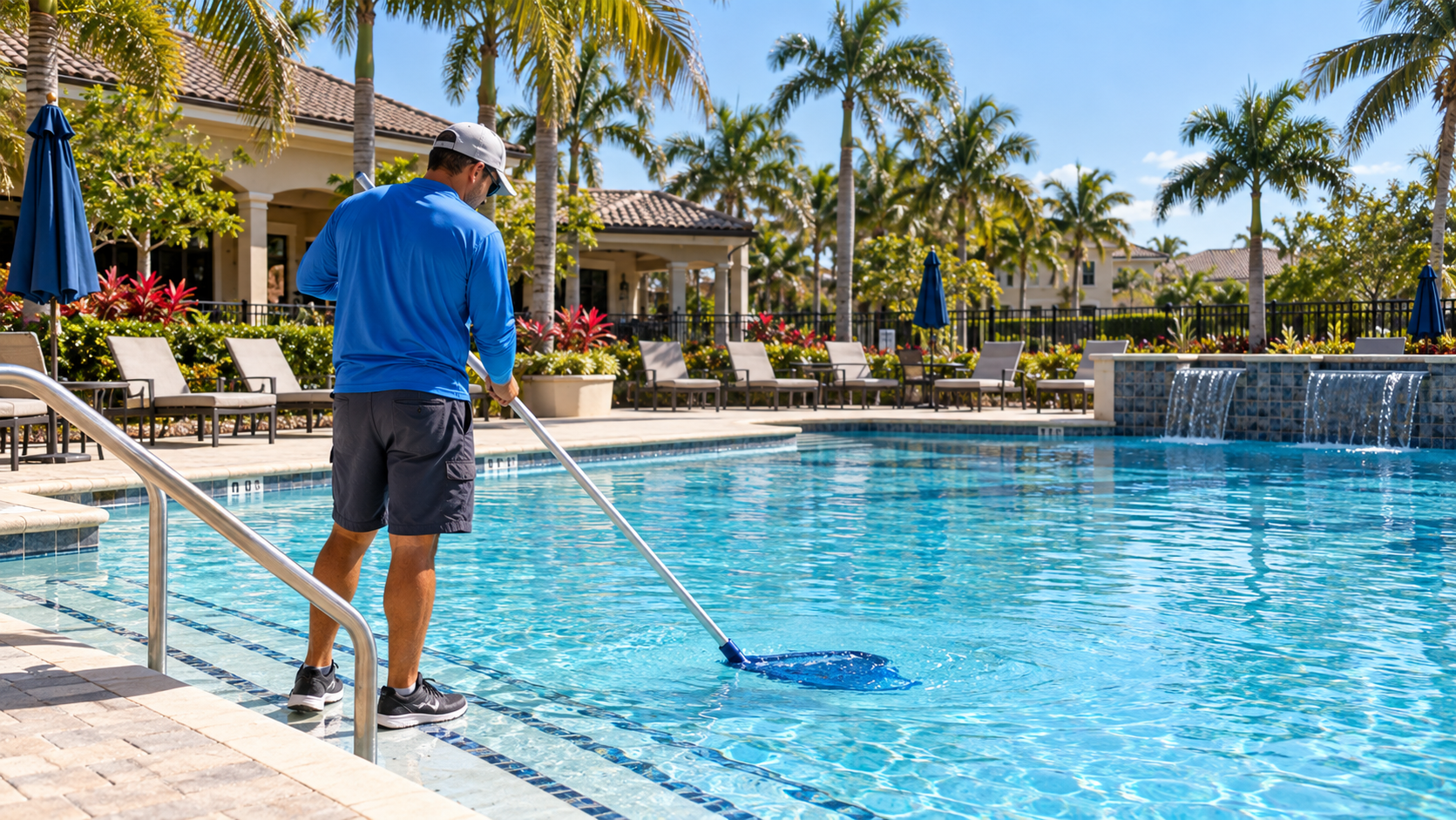
What Naples HOAs and condo boards should expect from commercial pool cleaning, from chemistry logs to Florida rules.
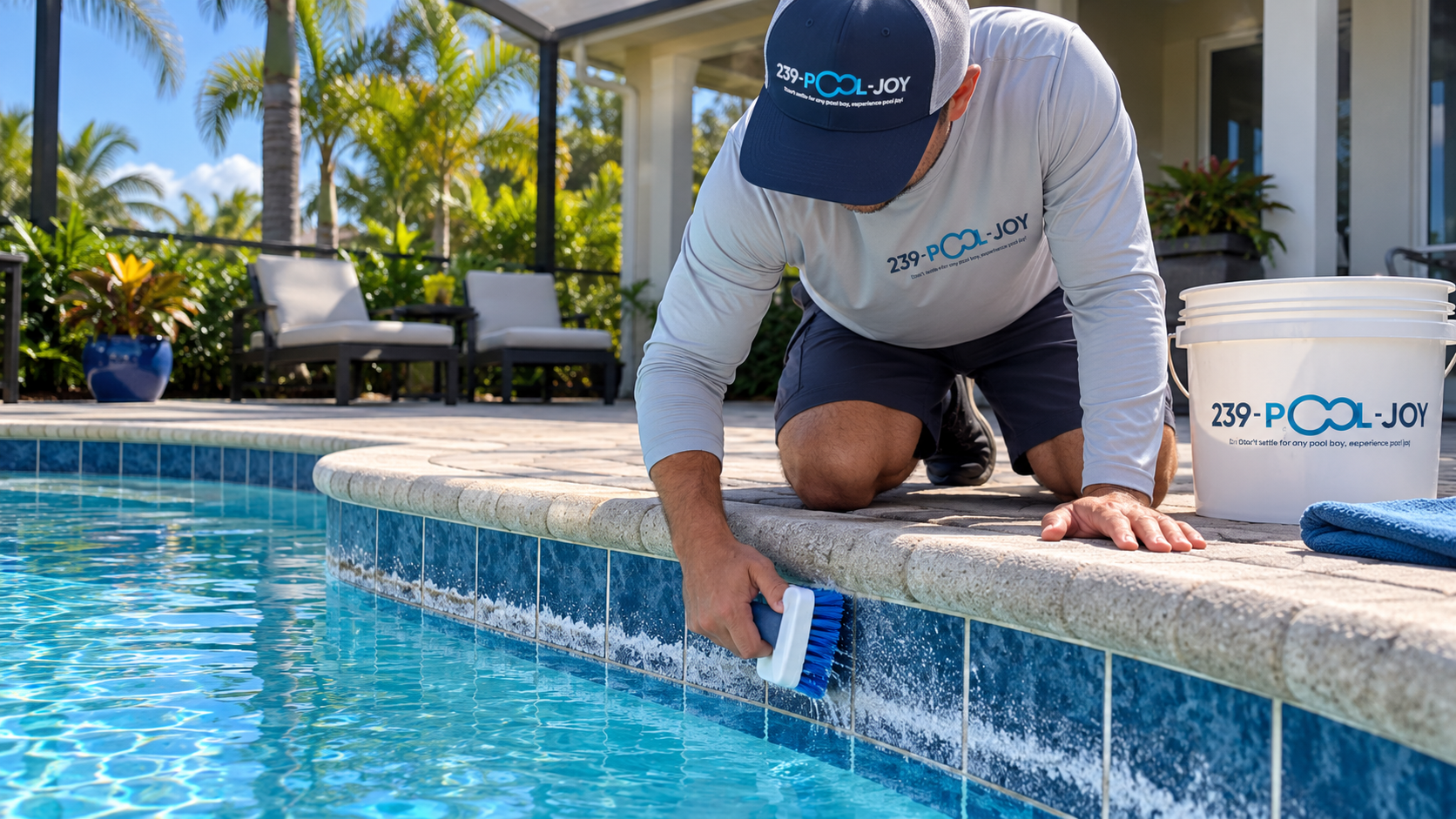
That white, chalky line on your pool tile isn't just an eyesore. Calcium buildup is one of the most common issues for Naples and Ave Maria pool owners, and Southwest Florida's hard water makes it worse. Learn how to identify the deposit type, remove it safely, and keep it from coming back.
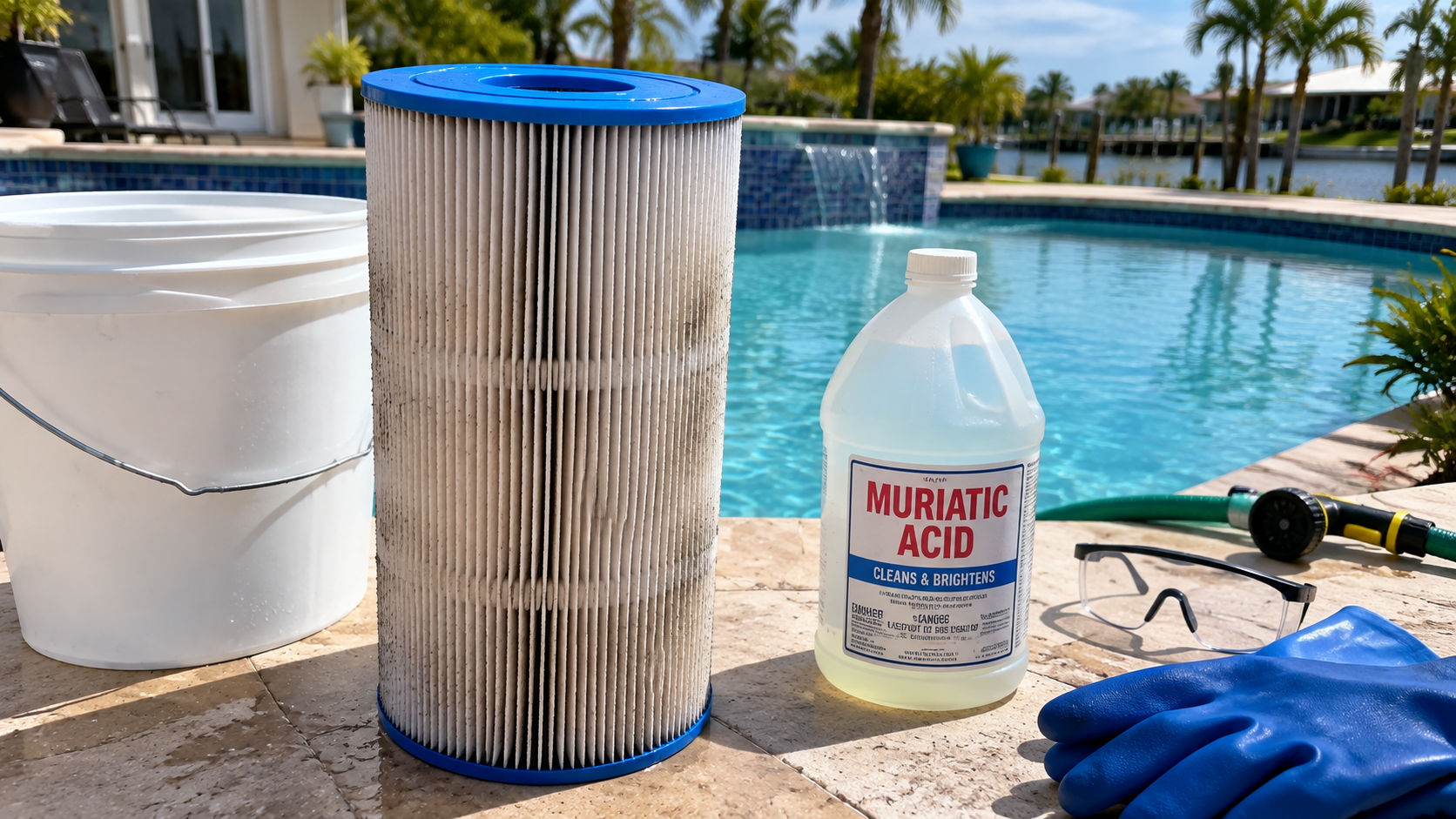
Naples pool filters take a beating year-round. This step-by-step guide from 239 Pool Joy walks you through how to deep clean your cartridge filter with muriatic acid, safely and correctly, so your pool stays clear all season.

© 2026 239-POOL-JOY LLC. All Rights Reserved | By Bulldog Marketing Group
Pool cleaning company | Naples pool service
Business licensed #SCC131152842
Sitemap