Every swimming pool will develop a leak at some point. It is not a question of "if" but "when." The good news? Most pool leaks happen in the same predictable spots. If you know where to look, you can catch problems early and avoid expensive damage down the road.
Whether you own a concrete pool, a vinyl liner pool, or a pool and spa combo, this guide covers the most common pool leak locations, how to find a leak yourself, and when it makes sense to call a professional leak detection company.
Why Do Pool Leaks Happen?
Before we walk through common places where leaks show up, it helps to understand why they happen in the first place.
Pools are complex structures. They have shells made of concrete, gunite, or vinyl. They have plumbing systems with PVC pipe running underground. They have dozens of fittings, seals, and penetrations where equipment connects to the pool structure.
Over time, all of these parts settle over time, expand and contract with temperature changes, and wear down from constant water exposure. That normal aging is what makes certain areas more susceptible to leaks than others.
Here are the most common issues that cause a pool to leak:
- Ground movement that shifts the pool structure and cracks the shell
- Aging seals and gaskets around fittings, lights, and returns
- Deteriorating grout and tile along the water line
- Corroding or cracking PVC pipe in the underground plumbing
- Chemical imbalance that eats away at plaster or liner material
Now let's look at exactly where these leaks happen most often.
The Most Common Pool Leak Locations
1. The Skimmer
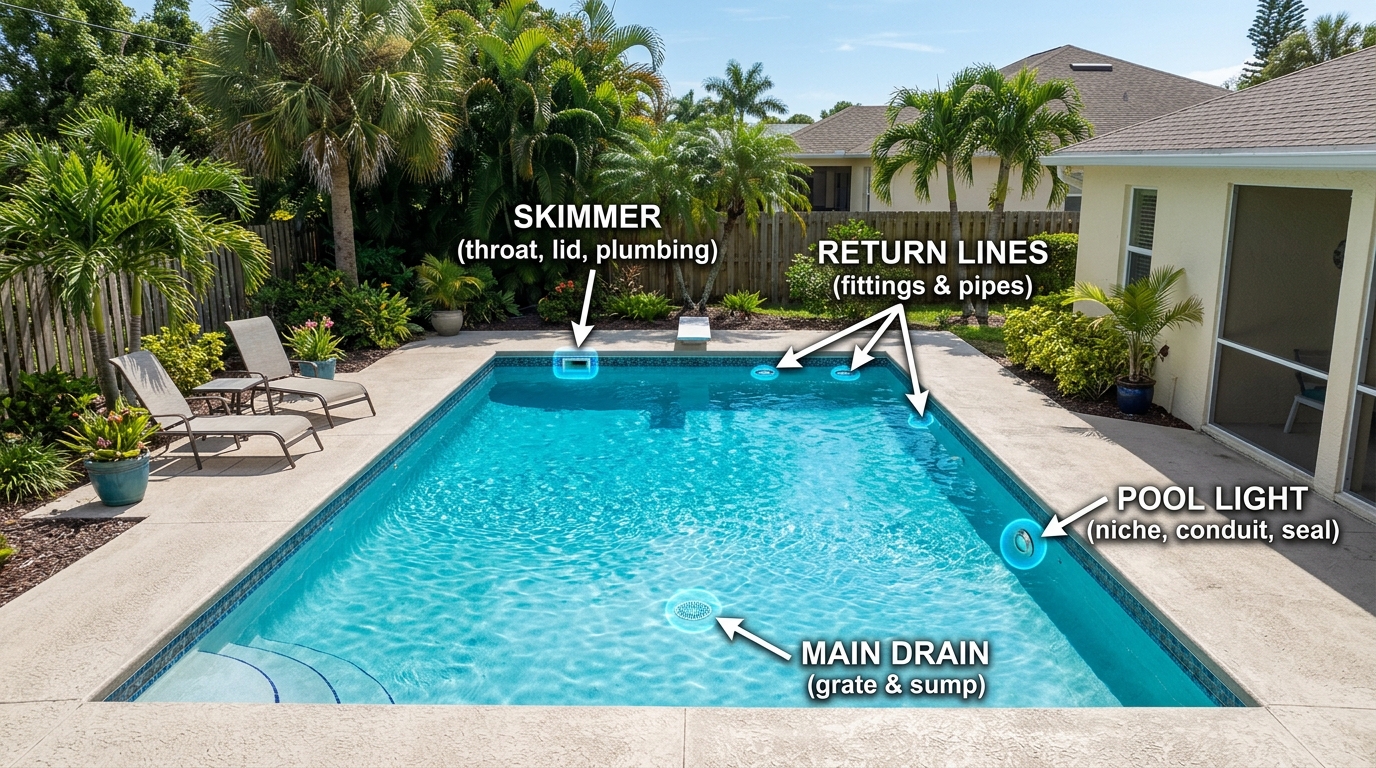
The skimmer is one of the most common leak spots on any swimming pool. Why? Because the skimmer is a separate plastic or concrete box that meets the pool wall, and that joint is under constant stress.
Over time, the connection where the skimmer meets the pool wall can separate. Concrete pools are especially prone to this because the pool shell and skimmer expand at different rates. When that happens, a gap forms and water escapes.
What to look for near the skimmer:
- Cracks around the mouth of the skimmer opening
- Gaps where the skimmer body meets the pool wall
- Water loss that stops when the pool water level drops just below the skimmer
- Wet spots or soft ground in the yard near the skimmer
DIY Check: Turn off the pool pump and let the water sit still. Squeeze a small amount of leak detection dye near the skimmer throat. If the dye gets pulled into a crack or gap, you have found the source.
2. Return Lines and Fittings
Pool returns are the jets that push filtered water back into the pool. Each return line passes through the pool's wall via a fitting, and each one of those penetrations is a potential leak point.
Common leak problems at return lines include:
- Loose or deteriorated fittings where the return line pipe connects to the pool wall
- Cracked face plates or eyeball jet housings
- Failed sealant around the pipe penetration
- Underground plumbing leaks in the return line pipe itself
Many pool owners overlook the returns because they seem simple. But a slow drip at a single fitting can waste hundreds of gallons per week. If you have multiple return lines (and most pools do), each one should be checked during a leak test.
3. Pool Light Niche
Pool lights are another very common leak source. The light niche is a housing set into the pool's wall that holds the light fixture. Water can leak through the conduit that runs from the light niche to the junction box behind the pool wall.
The conduit is a small pipe or tube that protects the wiring. Ideally, it is sealed with a waterproof putty or stopper to prevent water from traveling through it. But over time, that seal can fail, and water begins to escape through the conduit.
Signs of a pool light leak:
- Wet ground or standing water near the pool equipment area (where the conduit exits)
- Water loss that seems to come and go
- Visible corrosion or moisture around the light fixture
- Dye near the light fitting gets pulled behind the niche
Light niche leaks can be tricky. The water may travel a long distance through the conduit before showing up as a wet spot, making it hard to pinpoint without professional help.
4. Main Drain
The main drain sits at the bottom of the pool and is connected to the plumbing system via underground pipe. Like the skimmer, the main drain is a penetration through the pool shell, and the seal between the drain housing and the pool surface can fail over time.
In concrete pools, you may also see cracks forming in the plaster or gunite around the main drain. This is common in older pools where the shell has shifted or settled.
Leaks at the main drain are harder to inspect because of the depth. A professional dye test performed by a certified leak detection company is usually the best way to diagnose this area.
5. Underground Plumbing
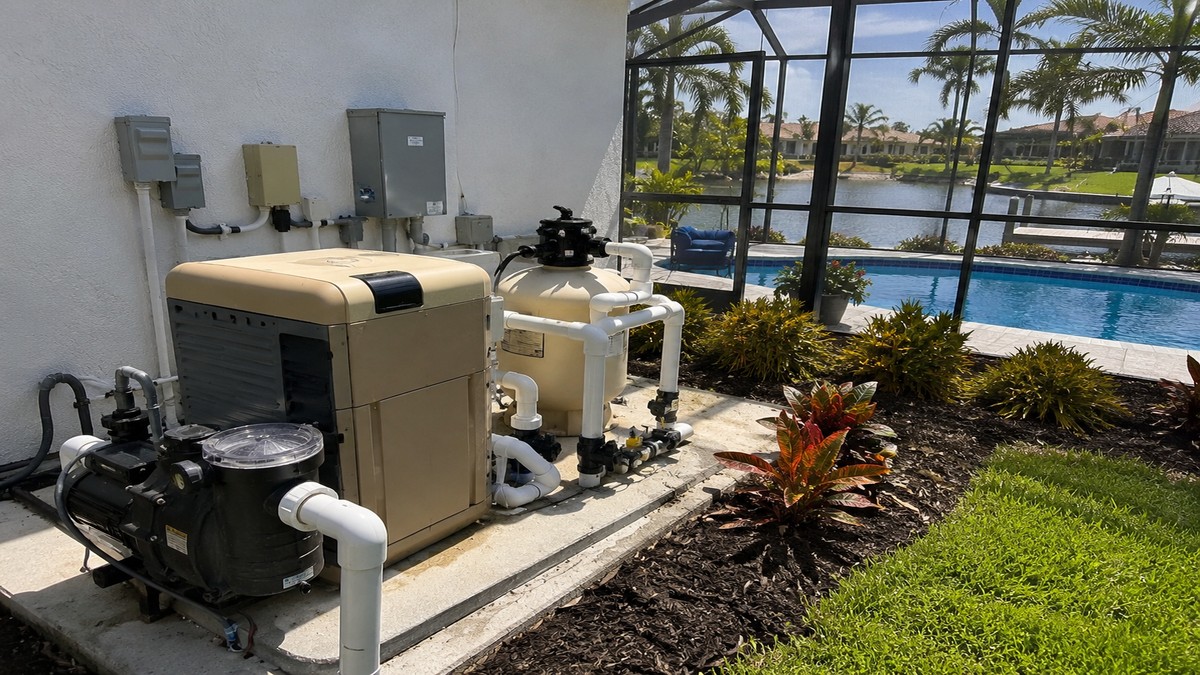
If you have checked all the visible areas of the pool and still cannot find a leak, the problem may be in the underground plumbing. These are the PVC pipes that connect the pool to the pump, filter, heater, and other equipment.
Underground plumbing leaks are among the hardest to diagnose because you cannot see the pipes. They can be caused by:
- Root intrusion cracking or displacing the pipe
- Ground settling that puts stress on pipe joints
- Age and corrosion of older plumbing systems
- Poor original installation with weak joints or fittings
Signs of an underground plumbing leak include wet spots or unusually green grass in the yard between the pool and equipment pad. You may also notice that the pool is leaking at a different rate when the pump is running versus when it is off. That difference can help you spot whether the leak is on the pressure side (return lines) or suction side (skimmer and main drain lines) of the plumbing system.
A pressure test is the gold standard for finding underground leaks. A technician will plug each plumbing line and pressurize it to see which line loses pressure. This is specialized work that requires the right tools and training.
6. Tile, Grout, and the Water Line
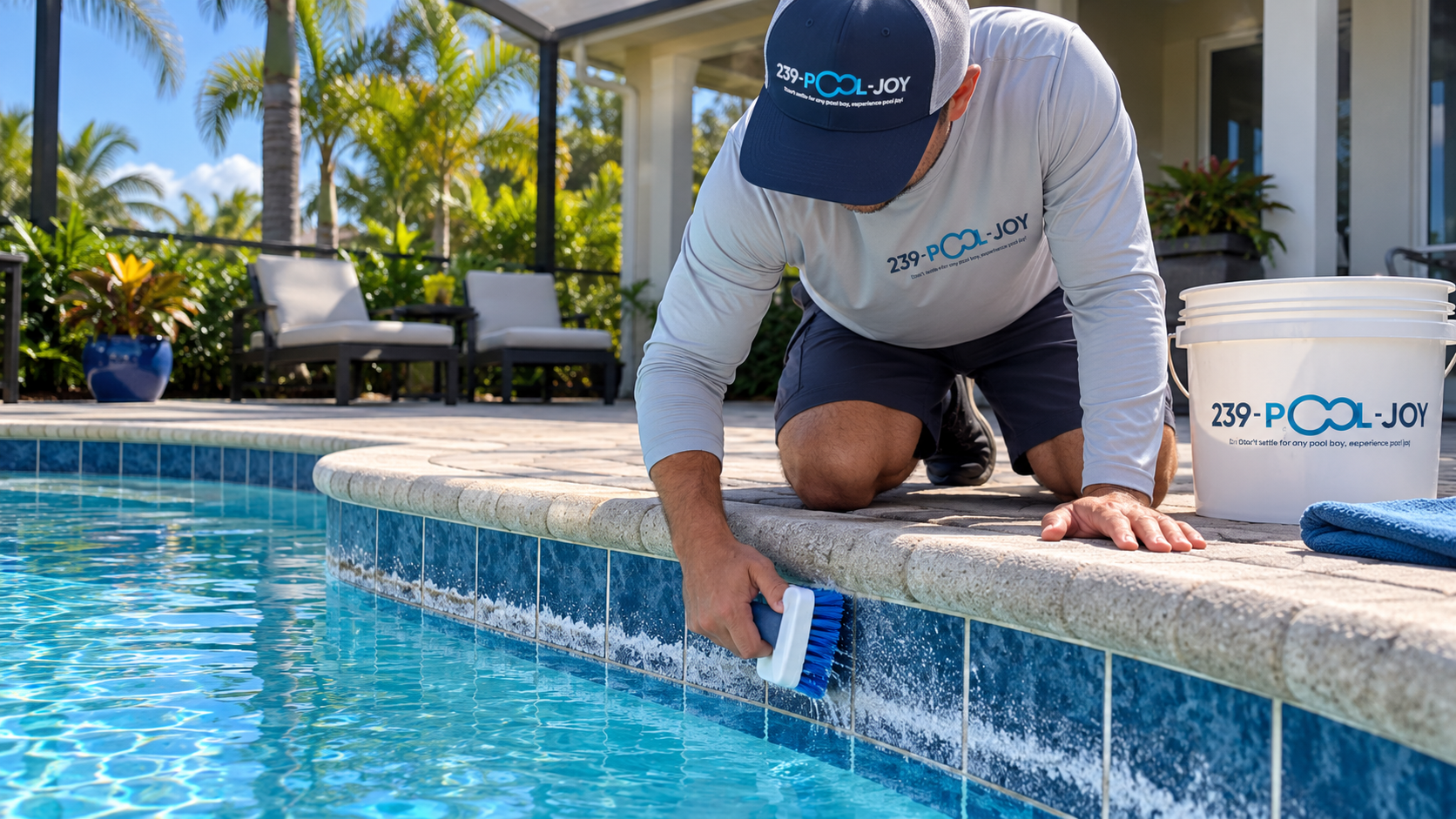
Along the top edge of many pools, you will find a row of decorative tile. The grout between those tiles and the bond beam can crack and deteriorate over time, allowing water to seep behind the tile and into the pool structure.
This type of leak is usually slow and can be hard to notice. But over months, it can cause real damage to the area behind the tile, including erosion of the bond beam and deck lifting.
Inspect the tile line regularly for cracked grout, missing tile, or areas where the tile has separated from the wall.
7. Vinyl Liner Tears and Holes
If you have a vinyl liner pool, the liner itself is the most common leak source. Vinyl is durable but not indestructible. Sharp objects, pet claws, pool toys, ladders, and even normal wear can create small tears or punctures.
How to find a leak in a vinyl pool liner:
- Visually inspect the entire liner for tears, especially near steps, the ladder, fittings, and corners
- Run your hand gently over the liner surface to feel for rough spots or small holes
- Use leak detection dye around any suspect area. Squeeze the dye near the spot and watch if it gets pulled through
A small hole in a vinyl liner can sometimes be repaired with a waterproof patch kit. Larger tears or multiple punctures may require a full liner replacement.
How to Tell If It Is a Leak or Evaporation
Before you assume your pool is leaking, rule out normal evaporation first. In Southwest Florida, high heat and humidity can cause a pool to evaporate at a noticeable rate, especially during summer months.
The bucket test is the easiest way to check:
- Place a bucket of pool water on the pool step
- Mark the water level inside the bucket and the pool water level outside
- Wait 24 hours with the pump running as normal
- Compare the two levels
If the pool lost more water than the bucket, you have a leak. If both dropped about the same amount, the water loss is due to evaporation and is completely normal.
| Leak Location | How Common | Typical Cause | DIY Detectable? |
| Skimmer | Very Common | Separation from pool wall | Yes (dye test) |
| Return Lines | Very Common | Loose fittings, cracked seals | Sometimes |
| Pool Light / Conduit | Common | Failed conduit seal | Difficult |
| Main Drain | Moderate | Seal failure, shell cracks | No (too deep) |
| Underground Plumbing | Moderate | Ground shift, root damage, age | No (pressure test needed) |
| Tile / Grout / Water Line | Moderate | Cracked grout, missing tile | Yes (visual) |
| Vinyl Liner | Common (liner pools) | Tears, punctures, wear | Yes (dye test) |
When to Call a Professional Leak Detection Company
Some leaks are easy to spot. Others are hidden deep in the plumbing system or behind pool walls. If you have done the bucket test, checked the visible areas, and still cannot diagnose your pool, it is time to call a professional.
A professional leak detection team can help you spot problems that are invisible to the naked eye. They use advanced tools including:
- Electronic listening devices that detect the sound of water moving through cracks and pipe joints
- Pressure testing to isolate leaks in each plumbing line
- Leak detection dye applied with precision to pinpoint the exact source
- Camera inspection of underground plumbing when needed
At 239-POOL-JOY, we bring over 20 years of experience to every job. Our certified technicians inspect every common pool leak location, from the skimmer and return lines to the light niche, main drain, and underground plumbing. We do not guess. We find the leak and fix it.
Protect Your Pool From Leaks
Every pool owner should know the common places where leaks may develop. Catching a leak early means a simpler, less expensive repair. Letting it go means rising water bills, potential structural damage, and costly restoration work.
Here is how to stay ahead of problems:
- Run a bucket test any time you suspect unusual water loss
- Inspect the skimmer, returns, and light area at least once a season
- Watch for wet spots around the pool and equipment pad
- Schedule an annual pool inspection with a trusted professional
- Act fast when you notice a sign of a leak
At 239-POOL-JOY, we serve pool owners across Naples and Ave Maria, FL with expert pool leak detection services, pool inspections, pool cleaning, equipment repairs, and installations. We treat every pool and spa like our own, and our goal is simple: help you enjoy your pool without the stress.
Think your pool might be leaking? Contact 239-POOL-JOY today or call us at (239) 766-5569 for a professional leak detection appointment. We will find the leak, fix it, and get you back to enjoying your swimming pool.
Related Services from 239-POOL-JOY