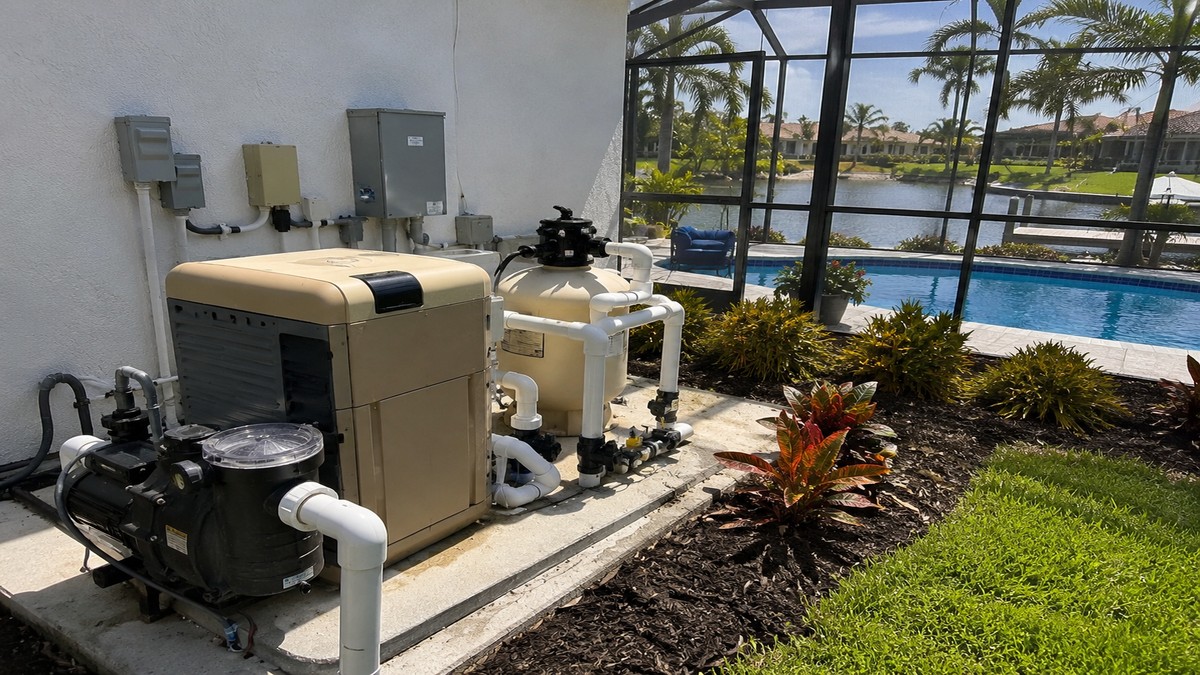
Picking new pool equipment shouldn't feel like decoding an engineering manual. Pool equipment installation decisions, whether you're replacing a dying pump or adding a heater for year-round swims, come down to a handful of practical choices that most Naples and Ave Maria homeowners can understand in one conversation. At 239 Pool Joy, we walk clients through these decisions every week, and the questions rarely change even though every backyard does.
This guide breaks down the three big categories, heaters, pumps, and automation, so you know what you're actually paying for before a technician ever shows up.
Heaters: Matching the System to Southwest Florida Weather
Naples winters are mild, but they're not swim-every-day mild without help. The right heater depends less on brand and more on how you actually use the pool.
Gas Heaters
Gas heaters heat fast, often within an hour or two, which makes them the right call for pools used occasionally or for weekend gatherings. However, they cost more to run per hour than other options, so a family swimming daily will feel that in monthly propane or natural gas bills.
Heat Pumps
Heat pumps pull warmth from the surrounding air rather than generating it directly, so they're far more efficient for regular use. The tradeoff is speed. A heat pump might take 24 to 48 hours to bring a pool up to temperature after a cold snap, which means it works best for homeowners who keep their pool in a consistent range rather than heating on demand.
Solar Heating
Solar add-ons work well in Southwest Florida given the sun exposure, and they carry no ongoing fuel cost. They do need enough usable roof space, and output drops during stretches of cloud cover, so most solar installs pair with a backup heater rather than standing alone.
A quick reality check from the field: we installed a heat pump for an Ave Maria client last winter who expected pool-ready water within the hour, the same night. She was frustrated for the first two days. Once she understood the heat pump's job is to hold a steady temperature rather than spike it quickly, the system made a lot more sense, and she's since told us it's cut her energy costs noticeably compared to the gas heater it replaced.
Pumps: Sizing, Speed, and Efficiency
A pump that's too big wastes energy. One that's too small won't circulate water properly, and that leads to algae and cloudy water faster than most owners expect.
Single-Speed vs Variable-Speed
Single-speed pumps run at one fixed speed, full power, whenever they're on. Variable-speed pumps adjust output based on what the pool actually needs at that moment, running slower for normal filtration and ramping up only when necessary. Because of that flexibility, variable-speed pumps typically cut energy costs by 50 to 70% compared to older single-speed models.
Signs your pump needs replacing:
- Unusual grinding or humming noise
- Water flow noticeably weaker at return jets
- Pump running but not priming correctly
- Energy bill creeping up without other explanation
Sizing It Correctly
Pump sizing depends on pool volume, plumbing size, and how many features run off it, such as spillovers or water features. An undersized pump struggles to turn over the full volume of water in a reasonable window, while an oversized one burns through electricity for no real benefit. This is one area where guessing costs money either way, so it's worth having someone calculate flow rate against your actual pool specs rather than picking based on horsepower alone.
Automation: Controlling Everything From Your Phone
Automation systems have gone from a luxury add-on to a fairly standard upgrade, particularly for pools with multiple pieces of equipment working together.
A modern automation system typically controls:
- Pump speed and schedule
- Heater on/off and target temperature
- Lighting, including color-changing LED systems
- Water features, such as spillovers or fountains
- Chemical feeders, on systems equipped for it
Because these systems tie everything into one interface, automation makes the biggest difference for pools with several components running independently. A single heater and single pump might not justify the cost. A pool running a heater, variable-speed pump, lighting, and a water feature, however, gets real value from managing all of it through one app instead of four separate controls.
What Installation Actually Involves
Installation timelines vary, but homeowners in Naples and Ave Maria should expect the following general process regardless of which equipment is going in.
Step 1: Site Assessment
A technician evaluates existing plumbing, electrical capacity, and equipment pad space before recommending specific models. This step catches issues, like insufficient electrical service for a new heat pump, before they become installation-day surprises.
Step 2: Permitting
Most pool equipment installations in Collier County require permits, particularly for gas line work or electrical upgrades. Skipping this step can create problems later, especially at resale, so it's worth confirming your installer handles permitting rather than assuming it's optional.
Step 3: Removal and Installation
Old equipment gets disconnected and removed, new equipment gets set and connected, and all electrical, gas, or plumbing connections are completed to code.
Step 4: Testing and Calibration
Every system gets tested under real operating conditions. For automation, this includes programming schedules and confirming the app connects properly to every component it's supposed to control.
Frequently Asked Questions
How long does pool equipment installation typically take?
A single piece of equipment, like a pump replacement, often takes half a day. Full system upgrades involving a heater, pump, and automation together can take one to three days depending on permitting and any plumbing or electrical work needed.
Do I need a permit to install a new pool heater in Naples?
In most cases, yes, particularly for gas heaters or any work involving new electrical or gas lines. Your installer should handle the permitting process as part of the job rather than leaving it to the homeowner.
Is a variable-speed pump worth the extra upfront cost?
For most regularly used pools, yes. The energy savings, often 50 to 70% compared to single-speed models, tend to offset the higher purchase price within a few years, and many utility companies offer rebates that shorten that timeline further.
Can I add automation to equipment I already own?
In many cases, yes, as long as the existing equipment is compatible with automation controls. Older equipment sometimes needs a compatible retrofit kit, so it's worth having a technician confirm compatibility before purchasing a system.
What size heat pump do I need for my pool?
Heat pump sizing depends on pool volume, desired temperature range, and how much wind or shade exposure the pool area gets. An undersized unit will struggle to maintain temperature during cooler stretches, so proper sizing matters more than picking the biggest available model.
How often does pool equipment need to be serviced after installation?
Most equipment benefits from a professional check twice a year, though pumps and heaters running daily may need more frequent filter and component checks. Regular servicing also tends to catch small issues before they turn into full equipment failures.
Ready to Upgrade Your Pool Equipment?
Whether you're replacing a single pump or building out a full automation system, getting the right equipment installed correctly the first time saves money and headaches down the line. Book a consultation with 239 Pool Joy and we'll walk your Naples or Ave Maria backyard through exactly what makes sense for how you actually use your pool.
{ "@context": "https://schema.org", "@graph": [ { "@type": "Article", "headline": "Pool Equipment Installation Guide: Heaters, Pumps, and Automation", "author": { "@type": "Organization", "name": "239 Pool Joy" }, "publisher": { "@type": "Organization", "name": "239 Pool Joy" }, "about": "Guide to pool equipment installation covering heaters, pumps, and automation for Ave Maria and Naples, FL homeowners", "articleSection": "Pool Equipment", "keywords": "pool equipment installation", "mainEntityOfPage": { "@type": "WebPage", "@id": "https://www.239pooljoy.com/blog/pool-equipment-installation-guide-heaters-pumps-and-automation" }, "url": "https://www.239pooljoy.com/blog/pool-equipment-installation-guide-heaters-pumps-and-automation" }, { "@type": "FAQPage", "mainEntity": [ { "@type": "Question", "name": "How long does pool equipment installation typically take?", "acceptedAnswer": { "@type": "Answer", "text": "A single piece of equipment, like a pump replacement, often takes half a day. Full system upgrades involving a heater, pump, and automation together can take one to three days depending on permitting and any plumbing or electrical work needed." } }, { "@type": "Question", "name": "Do I need a permit to install a new pool heater in Naples?", "acceptedAnswer": { "@type": "Answer", "text": "In most cases, yes, particularly for gas heaters or any work involving new electrical or gas lines. Your installer should handle the permitting process as part of the job rather than leaving it to the homeowner." } }, { "@type": "Question", "name": "Is a variable-speed pump worth the extra upfront cost?", "acceptedAnswer": { "@type": "Answer", "text": "For most regularly used pools, yes. The energy savings, often 50 to 70% compared to single-speed models, tend to offset the higher purchase price within a few years, and many utility companies offer rebates that shorten that timeline further." } }, { "@type": "Question", "name": "Can I add automation to equipment I already own?", "acceptedAnswer": { "@type": "Answer", "text": "In many cases, yes, as long as the existing equipment is compatible with automation controls. Older equipment sometimes needs a compatible retrofit kit, so it's worth having a technician confirm compatibility before purchasing a system." } }, { "@type": "Question", "name": "What size heat pump do I need for my pool?", "acceptedAnswer": { "@type": "Answer", "text": "Heat pump sizing depends on pool volume, desired temperature range, and how much wind or shade exposure the pool area gets. An undersized unit will struggle to maintain temperature during cooler stretches, so proper sizing matters more than picking the biggest available model." } }, { "@type": "Question", "name": "How often does pool equipment need to be serviced after installation?", "acceptedAnswer": { "@type": "Answer", "text": "Most equipment benefits from a professional check twice a year, though pumps and heaters running daily may need more frequent filter and component checks. Regular servicing also tends to catch small issues before they turn into full equipment failures." } } ], "mainEntityOfPage": { "@type": "WebPage", "@id": "https://www.239pooljoy.com/blog/pool-equipment-installation-guide-heaters-pumps-and-automation" } } ]
}