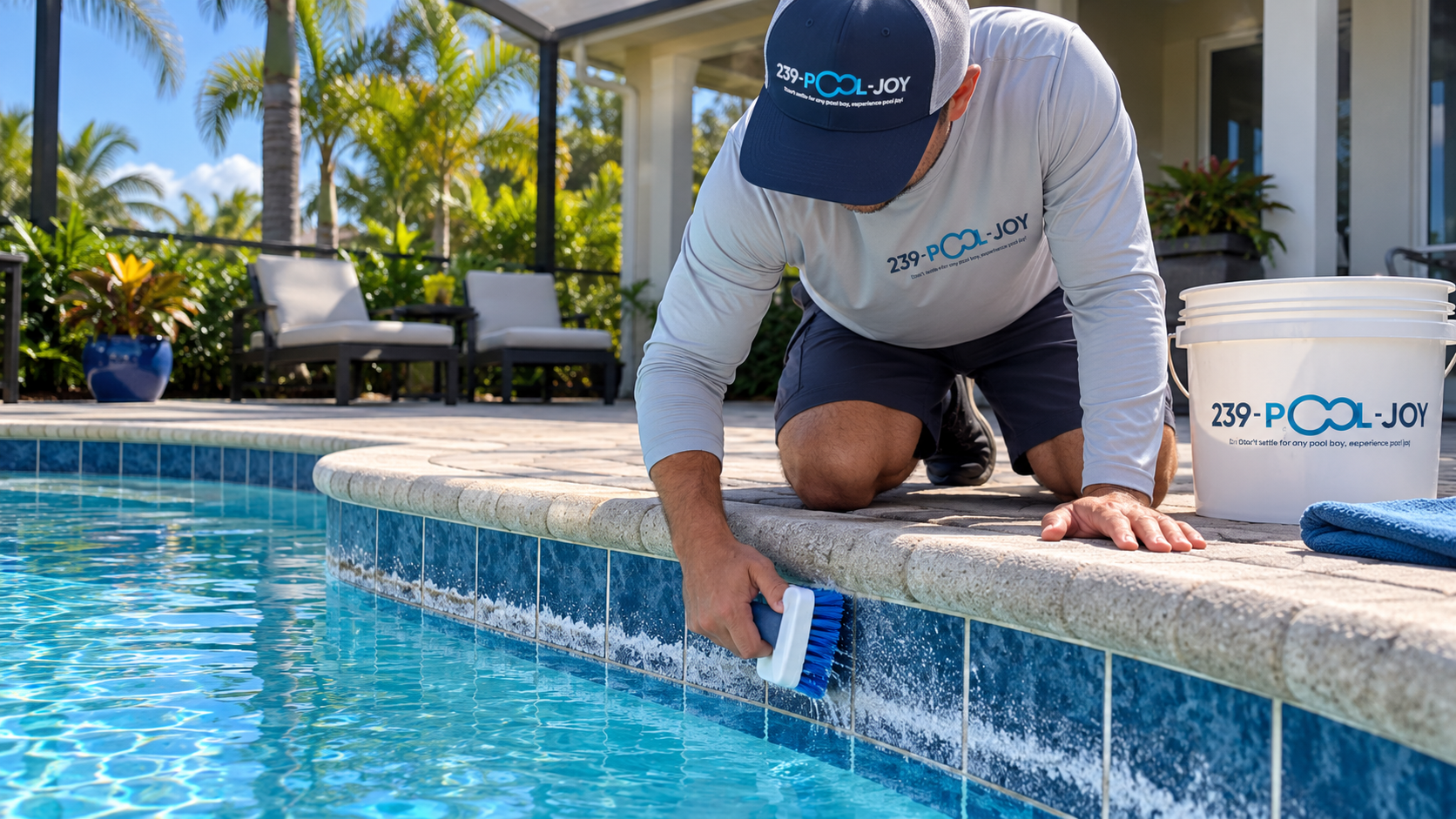
Naples pool filters take a beating year-round. This step-by-step guide from 239 Pool Joy walks you through how to deep clean your cartridge filter with muriatic acid, safely and correctly, so your pool stays clear all season.
September 17, 2026


If you've noticed a white, chalky line forming along your pool tile at the waterline, you're dealing with calcium buildup. It's one of the most common cosmetic and maintenance issues for pool owners in Naples and Ave Maria, and Southwest Florida's water chemistry makes it worse than most parts of the country.
239 Pool Joy works with pool owners across Collier County who ask about this regularly. The buildup looks stubborn, and in some cases it is. With the right approach, though, it can be removed without damaging your tile. Here's what causes it, how to get rid of it, and how to keep it from coming back as fast.
Calcium buildup at the waterline isn't random. It's a direct result of water chemistry, evaporation, and your local water source working together.
Southwest Florida's municipal water supply is naturally hard. Naples and the surrounding Collier County area draw from the Floridan Aquifer, which carries significant calcium and magnesium content through limestone-rich geology. When that water evaporates off your pool tile, it leaves the minerals behind. Over time, those deposits accumulate into the white or gray scale you see at the waterline.
Two types of calcium deposits form in pools, and they behave differently.
Calcium carbonate is the more common type. It's white, chalky, and relatively soft. You can often scratch it off with a fingernail. It forms when pH and alkalinity rise above their ideal range. In Naples's heat, evaporation accelerates the process considerably.
Calcium silicate is harder and darker, usually gray or white with a rougher texture. It takes longer to form, which is why you typically see it in pools that haven't been treated in a year or more. It does not respond to acid treatments alone and requires more aggressive mechanical removal.
Knowing which type you have before you start cleaning saves time and prevents unnecessary damage to your tile grout and surface.
The easiest test requires nothing more than a small amount of muriatic acid or a pH testing kit with a dropper.
Apply a drop of muriatic acid directly to the deposit. If it fizzes immediately, you have calcium carbonate. If it sits there without any reaction, you have calcium silicate. Both can be removed, but the methods differ, and misidentifying the type is one of the most common reasons DIY removal attempts fail or take far longer than they should.
Calcium carbonate responds well to acid-based treatments and moderate mechanical scrubbing. For most Naples pool owners dealing with a seasonal waterline ring, this is the type you'll encounter.
What you'll need:
The process:
Lower your pool water level about two inches below the tile line before you start. Working on wet tile with acid-based products dilutes the treatment and reduces its effectiveness.
Apply your descaler or diluted muriatic acid solution to a small section of tile, working in sections of two to three feet at a time. Let it dwell for two to three minutes. You should see minor fizzing as the acid reacts with the calcium carbonate.
Scrub with your pumice stone or nylon brush using consistent circular pressure. A pumice stone is safe for most ceramic and porcelain tile but should not be used on glass tile, which scratches easily. For glass tile, use a nylon brush only.
Rinse the section thoroughly with fresh water before moving to the next area. Do not let the acid solution dry on the tile or run into the pool in large quantities, as it will drop your pH significantly.
After cleaning all sections, test and rebalance your water chemistry before refilling to the normal level.
Calcium silicate requires more effort. Acid alone will not break it down effectively, which means you'll need mechanical removal in addition to chemical treatment.
A pumice stone with sustained pressure is the most accessible option for homeowners and works well on calcium silicate deposits of moderate thickness. The key is patience. This type of deposit needs to be worked in layers rather than scrubbed off all at once.
For heavy silicate buildup, particularly on pools that haven't been treated in several years, professional bead blasting or pressure washing with a specialized pool tile cleaning tool is the faster and more thorough solution. 239 Pool Joy handles tile cleaning as part of regular pool service for exactly this reason. Attempting to remove years of silicate buildup by hand is time-consuming, and aggressive scrubbing with the wrong tools can damage grout lines and tile edges.
A few products and methods cause more damage than the calcium itself.
Wire brushes scratch ceramic and porcelain tile surfaces and should never be used on pool tile regardless of deposit type.
Undiluted muriatic acid applied directly without proper dilution etches tile surfaces, damages grout, and can strip the glaze from ceramic tile permanently.
Pressure washing at high PSI without a tile-specific nozzle or the proper standoff distance cracks grout joints and forces water behind the tile, leading to future adhesion failures.
Vinegar is sometimes suggested as a natural alternative and does contain acetic acid, which reacts mildly with calcium carbonate. However, its concentration is far too low to remove any meaningful buildup. It's not a pool tile cleaning solution.
Removal is only half the equation. Naples and Ave Maria pool owners deal with hard water year-round, so prevention requires consistent attention to water chemistry.
Keep pH between 7.4 and 7.6. High pH is the primary driver of calcium carbonate formation. In Southwest Florida's heat, pH tends to drift upward faster than in cooler climates. Testing two to three times per week during peak summer months is not excessive.
Keep total alkalinity between 80 and 120 ppm. Alkalinity acts as a buffer for pH, and when it runs high, pH is harder to control.
Monitor calcium hardness. Ideal range for most pools is 200 to 400 ppm. Naples's source water already arrives with elevated calcium levels, so topping off frequently with hard tap water gradually raises hardness over a season. Using a small amount of softened or reverse osmosis water for top-off can help offset this, particularly during the dry season when evaporation rates are highest.
Brush your tile weekly. A nylon tile brush used consistently prevents deposits from mineralizing into the harder silicate form. Deposits that are two weeks old are significantly easier to remove than deposits that are six months old.
Consider a sequestering agent. Sequestrants bind to calcium and other minerals in the water and keep them in suspension rather than allowing them to precipitate onto tile surfaces. Added monthly as part of a maintenance routine, they meaningfully slow waterline buildup between service visits.
DIY tile cleaning makes sense for light to moderate calcium carbonate buildup that you're staying ahead of with regular maintenance. There are situations where professional service is the better call.
If your tile has not been cleaned in more than a year, the deposit is likely calcium silicate in at least some areas, and the volume of work involved in manual removal makes professional cleaning more cost-effective than the time it takes to do it yourself.
If your tile is glass, natural stone, or an unusual material, professional cleaning with the right tools and products prevents the accidental surface damage that comes from using the wrong abrasive.
If you're noticing calcium buildup alongside other water chemistry problems such as persistent cloudiness, recurring algae, or difficulty holding chlorine levels, the tile is a symptom of a broader balance issue that's worth having a professional assess as part of a full water chemistry consultation.
For most Naples pool owners, a light tile cleaning every three to four months prevents heavy buildup from forming. Southwest Florida's hard water and high evaporation rates accelerate deposit formation compared to other climates, so waiting until you have a visible ring means you're already dealing with a significant accumulation. Consistent weekly brushing between professional cleanings makes each service visit faster and less intensive.
Melamine foam works on very light surface deposits on smooth tile and is safe for most ceramic and porcelain surfaces. It's not effective on calcium silicate or on any deposit thicker than a surface film. For a genuine waterline ring, you'll need an acid-based treatment or a pumice stone to get meaningful results.
Over time, yes. Light calcium carbonate deposits are primarily a cosmetic issue at first. However, as deposits thicken, they can trap moisture and debris against the tile surface, accelerating grout deterioration. Heavy silicate deposits that build up over multiple seasons become increasingly difficult to remove without mechanical methods that risk grout and tile damage. Addressing buildup consistently is easier and less expensive than removing years of accumulated scale.
They're related but not the same. Efflorescence is calcium and mineral migration from the grout or mortar behind the tile, which appears as white streaking or powder on the tile surface. Calcium buildup at the waterline comes from the pool water itself depositing minerals as it evaporates. Both involve calcium compounds, but efflorescence indicates a moisture intrusion issue behind the tile rather than a water chemistry issue in the pool.
Yes, meaningfully so. Water drawn from the Floridan Aquifer has naturally high mineral content due to the limestone geology of Southwest Florida. Compared to surface water sources used in other parts of Florida, Collier County's tap water arrives at pool fill-up with higher baseline calcium hardness. Combined with Naples's high evaporation rates during the dry season, this creates conditions that accelerate waterline buildup faster than most pool owners expect when they move here from other states.
Yes. Tile cleaning is part of the full-service maintenance 239 Pool Joy provides for pools in Naples, Ave Maria, and the surrounding Collier County area. If you're dealing with calcium buildup and want it handled as part of your regular pool care, book a consultation and we'll assess the deposit type and work it into your service schedule.

Our Blog


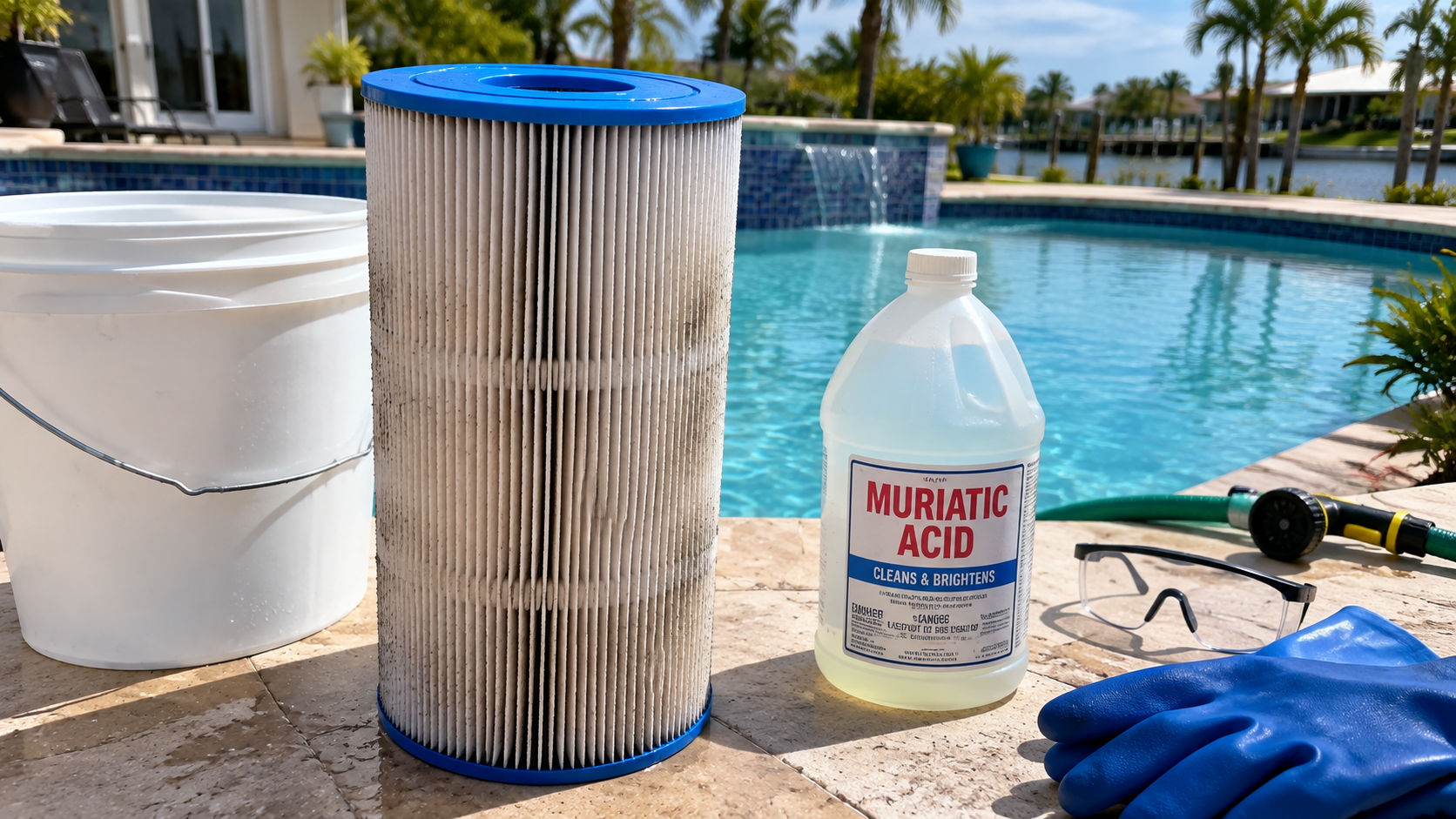
Naples pool filters take a beating year-round. This step-by-step guide from 239 Pool Joy walks you through how to deep clean your cartridge filter with muriatic acid, safely and correctly, so your pool stays clear all season.
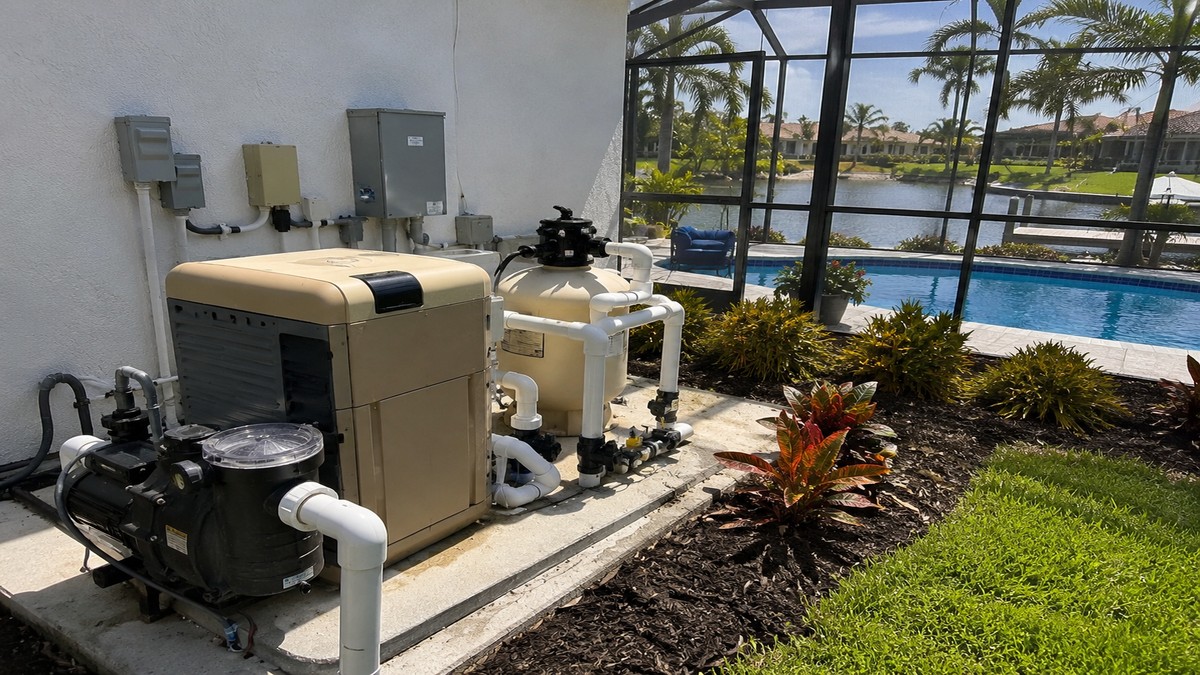
Pool equipment installation guide covering heaters (gas, heat pump, solar), pump sizing and single-speed vs. variable-speed, and automation systems, plus what the installation process involves for Naples and Ave Maria homeowners.
Naples humidity keeps your pool fighting algae year-round. Here's the routine that actually works.

© 2026 239-POOL-JOY LLC. All Rights Reserved | By Bulldog Marketing Group
Pool cleaning company | Naples pool service
Business licensed #SCC131152842
Sitemap