What HOAs and Condo Associations Should Expect
Commercial pool cleaning in Naples is a different job than caring for a backyard pool. A community pool may host dozens of swimmers on a busy Saturday. It also answers to health inspectors, board members, and residents who notice everything.
At 239 Pool Joy, we serve homeowners and communities across Naples and Ave Maria. Association boards often ask us the same thing: what should a good commercial pool service actually include? This guide answers that question.
You will learn what each visit should cover, which state rules matter, and how to plan around our busy winter season. If your board is comparing providers, use this as your checklist.
Why Commercial Pools Need a Different Approach
A residential pool might see a family of four on weekends. A condo or HOA pool, on the other hand, can serve hundreds of residents and their guests. That difference changes almost everything about maintenance.
Heavier Bather Loads
Every swimmer brings sunscreen, sweat, and body oils into the water. More swimmers means sanitizer gets used up faster. As a result, chemistry that looks perfect at 8 a.m. can drift by mid afternoon.
Higher Stakes for Mistakes
A cloudy residential pool is an annoyance. In contrast, a cloudy community pool can mean closure signs, resident complaints, and an unhappy board meeting. Liability also sits with the association, so documentation matters as much as clean water.
Bigger, Busier Equipment
Commercial systems often run larger pumps, filters, and chemical feeders for longer hours. Consequently, small equipment problems turn into big ones quickly when nobody checks them regularly.
What a Commercial Pool Cleaning Visit Should Include
A quick skim and a chlorine tab won't cut it for a community pool. Here is what your association should expect on each visit:
- Water testing and balancing for sanitizer, pH, alkalinity, and stabilizer
- Written chemistry records your board can pull up anytime
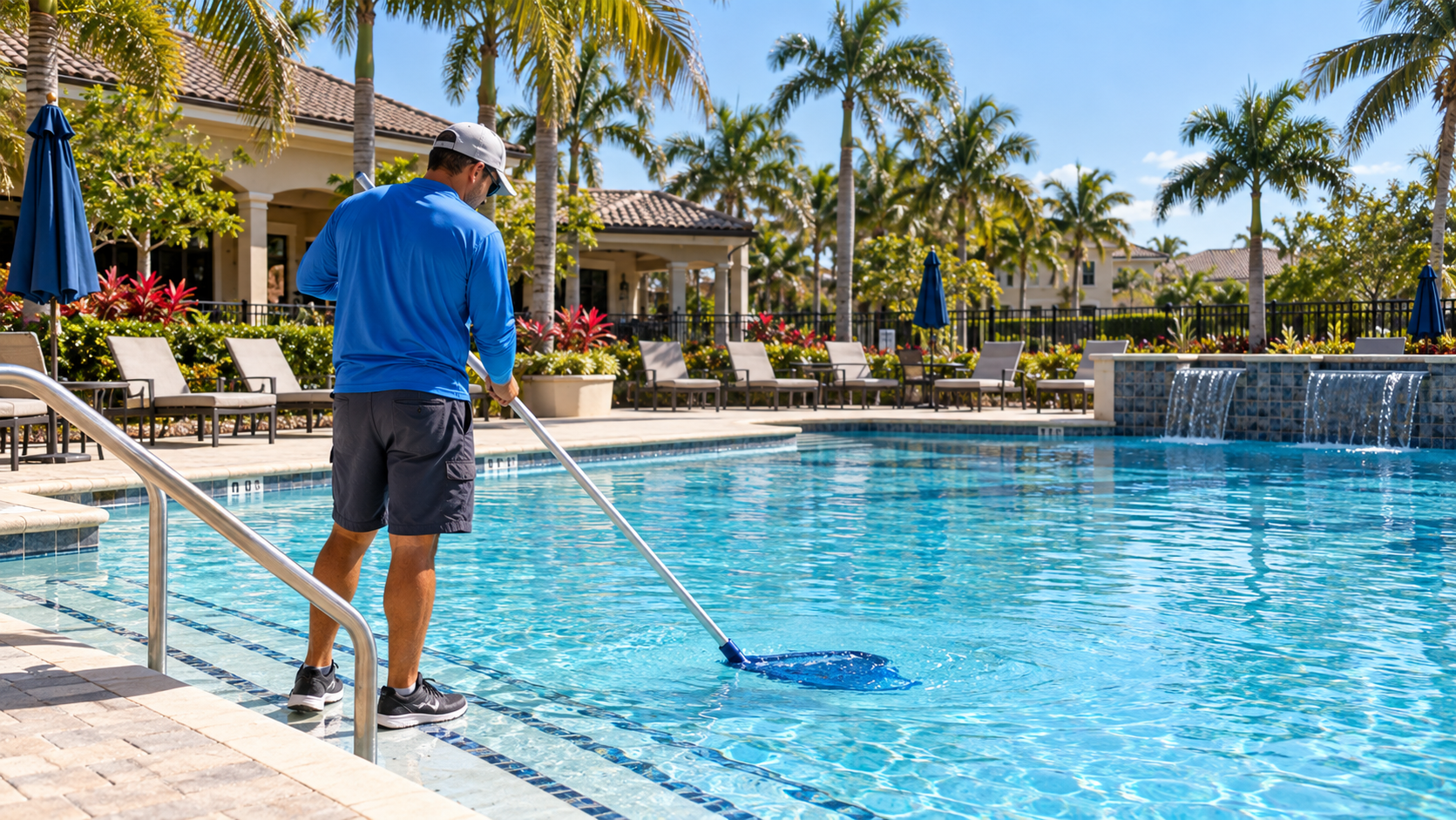
- Skimming, brushing, and vacuuming the floor, walls, and steps
- Emptying skimmer and pump baskets to keep flow strong
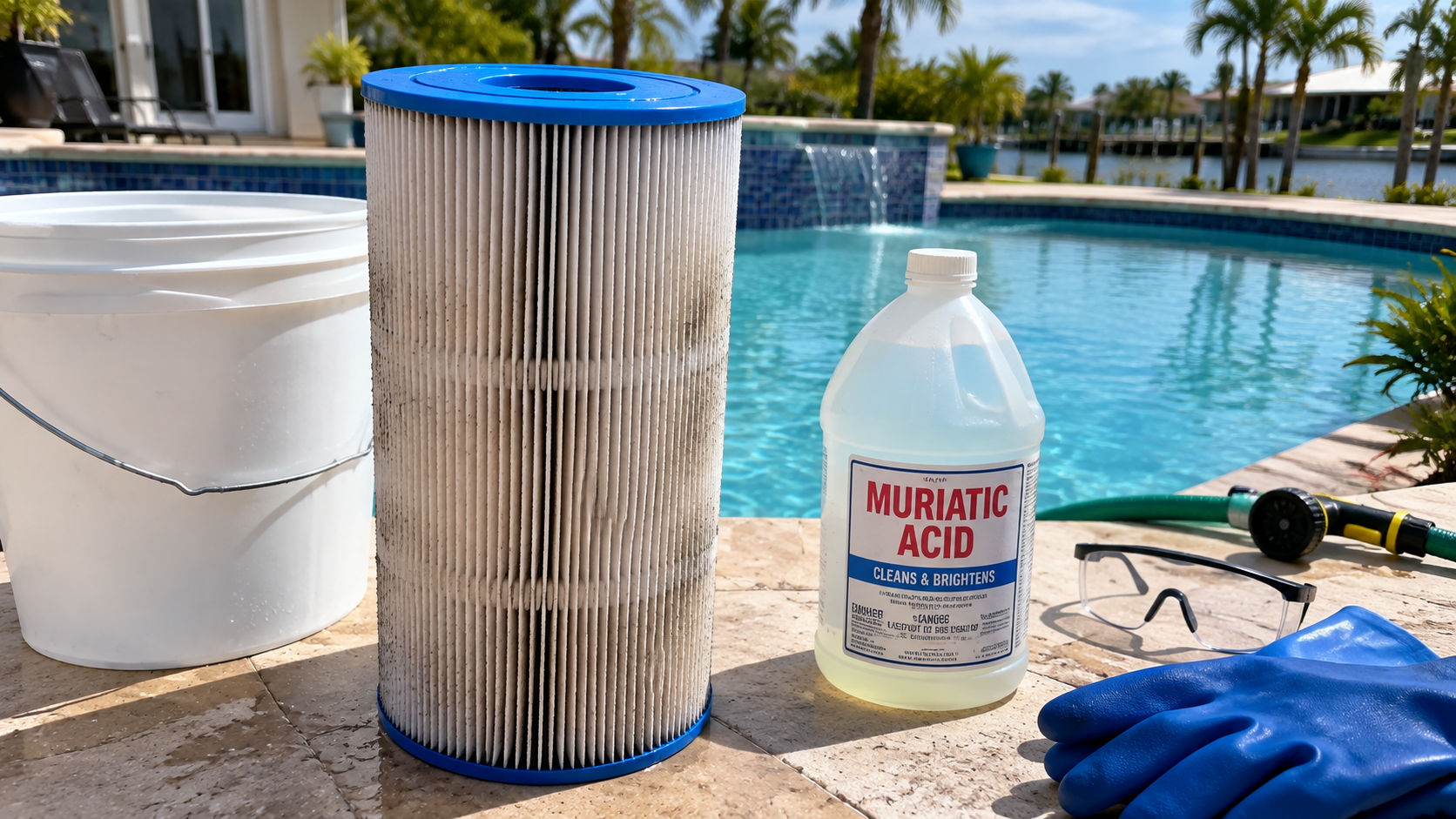
- Filter checks with cleaning or backwashing as needed
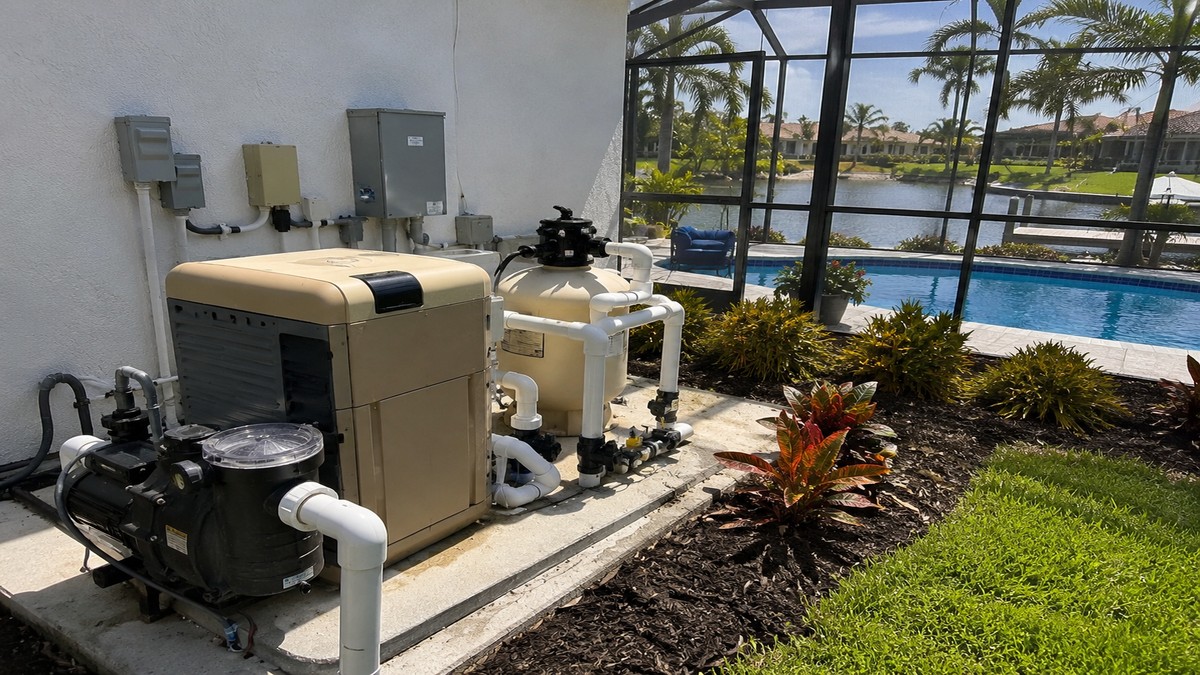
- Equipment inspection of pumps, feeders, heaters, and timers
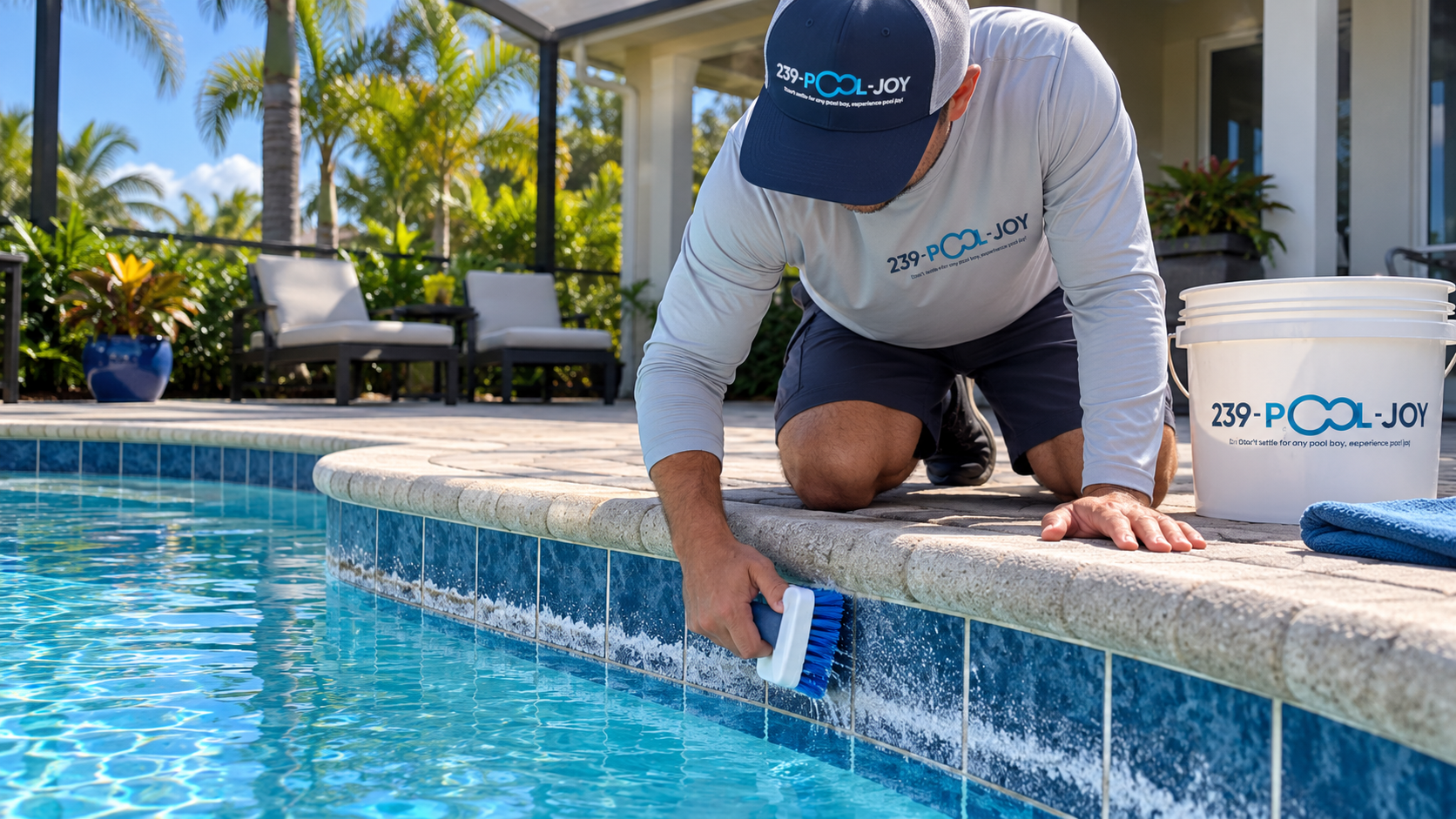
- Tile line cleaning to stop scale and grime from building up
For example, we often find a feeder running low or a pump basket packed with leaves after a windy night. Catching those small issues on a routine visit keeps the pool open. Skipping them is how a Friday problem becomes a closed pool on Saturday.
You should also get clear notes after each visit. A good provider tells the board what was done, what was found, and what needs attention next.
Florida Rules Your Association Should Know
In Florida, many condo and HOA pools count as public pools. That means they fall under Chapter 514 of the Florida Statutes and the Department of Health rules that go with it. The health department can inspect these pools and close them for violations.
The details vary by property, so your board should confirm its own requirements with the Florida Department of Health in Collier County. However, a few themes come up again and again:
- Sanitizer and pH must stay within required ranges
- Chemistry readings need to be recorded and kept on site
- Safety equipment and signage must be in place and in good shape
- Water clarity must allow the main drain to be seen clearly
This is exactly why record keeping matters. When an inspector arrives, a complete chemistry log shows your pool has been cared for consistently. Without it, even clean water can raise questions.
Planning for Naples' Seasonal Swings
Community pools in Naples and Ave Maria live two different lives each year. Your service plan should account for both.
Peak Season Brings Peak Crowds
From roughly January through April, seasonal residents return and pool decks fill up. Higher bather loads mean chemistry needs closer attention during these months. Many associations increase visit frequency during season, then scale back once the crowds thin out.
Summer Rain Changes the Water
Summer brings the opposite problem. Afternoon storms dump fresh rainwater into the pool almost daily. That rain dilutes sanitizer, shifts pH, and washes debris in from landscaping and screens.
As a result, a pool that looked fine before a storm may need rebalancing right after it. A provider who understands Southwest Florida weather plans for that instead of reacting to it.
How to Choose a Commercial Pool Service in Naples
Price matters, but it shouldn't be the only factor. Before your board signs a contract, ask every provider these questions:
- How often will you visit, and does that change in season?
- Do you keep written chemistry logs, and can we access them?
- Who handles equipment repairs if something fails mid week?
- How do you report problems to the board or property manager?
- Can you inspect the pool for leaks or worn equipment?
The last question matters more than most boards realize. A slow leak in a large commercial pool can waste a surprising amount of water before anyone notices. 239 Pool Joy offers leak detection, inspections, and equipment repair alongside cleaning, so one team can spot and solve problems instead of passing them along.
Also pay attention to how a provider communicates during the quote. If answers are vague now, reports will likely be vague later.
Commercial Pool Cleaning FAQ
How often should a condo or HOA pool be serviced?
Most community pools need service several times a week, especially during busy months. Bather load, weather, and the pool's size all affect the right schedule. Many Naples associations add visits during peak season from January through April.
Are HOA and condo pools regulated in Florida?
In many cases, yes. Florida treats many condo and HOA pools as public pools under Chapter 514 of the Florida Statutes. Your board should confirm its specific requirements with the Florida Department of Health in Collier County.
Why do commercial pools need chemistry records?
Records show that water quality has been checked and maintained consistently. Health inspectors may review them during an inspection. They also protect the association if a resident raises a concern.
What is the difference between residential and commercial pool cleaning?
Commercial pools handle far more swimmers and face stricter oversight. As a result, they need more frequent testing, detailed records, and closer equipment monitoring. Residential service is usually lighter and less frequent.
Does 239 Pool Joy serve communities outside Naples?
Yes. 239 Pool Joy serves residential and commercial pools in Naples, Ave Maria, and nearby Southwest Florida communities. Contact the team to confirm service for your property.
Book a Commercial Pool Consultation
Your residents want a pool that is clean, safe, and open when they need it. Your board wants fewer surprises and clear records. The right commercial pool service delivers both.
239 Pool Joy provides commercial pool cleaning for HOAs and condo associations across Naples and Ave Maria. Book a consultation today, and we will walk your property and recommend a schedule that fits your community.
{ "@context": "https://schema.org", "@graph": [ { "@type": "Article", "headline": "Commercial Pool Cleaning in Naples: What HOAs and Condo Associations Should Expect", "description": "Commercial pool cleaning in Naples for HOAs and condo associations. See what service should include from 239 Pool Joy. Book a consultation.", "author": { "@type": "Organization", "name": "239 Pool Joy", "url": "https://www.239pooljoy.com/" }, "publisher": { "@type": "Organization", "name": "239 Pool Joy", "url": "https://www.239pooljoy.com/" }, "datePublished": "2026-10-09", "mainEntityOfPage": "https://www.239pooljoy.com/blog/commercial-pool-cleaning-in-naples" }, { "@type": "FAQPage", "mainEntity": [ { "@type": "Question", "name": "How often should a condo or HOA pool be serviced?", "acceptedAnswer": { "@type": "Answer", "text": "Most community pools need service several times a week, especially during busy months. Bather load, weather, and the pool's size all affect the right schedule. Many Naples associations add visits during peak season from January through April." } }, { "@type": "Question", "name": "Are HOA and condo pools regulated in Florida?", "acceptedAnswer": { "@type": "Answer", "text": "In many cases, yes. Florida treats many condo and HOA pools as public pools under Chapter 514 of the Florida Statutes. Your board should confirm its specific requirements with the Florida Department of Health in Collier County." } }, { "@type": "Question", "name": "Why do commercial pools need chemistry records?", "acceptedAnswer": { "@type": "Answer", "text": "Records show that water quality has been checked and maintained consistently. Health inspectors may review them during an inspection. They also protect the association if a resident raises a concern." } }, { "@type": "Question", "name": "What is the difference between residential and commercial pool cleaning?", "acceptedAnswer": { "@type": "Answer", "text": "Commercial pools handle far more swimmers and face stricter oversight. As a result, they need more frequent testing, detailed records, and closer equipment monitoring. Residential service is usually lighter and less frequent." } }, { "@type": "Question", "name": "Does 239 Pool Joy serve communities outside Naples?", "acceptedAnswer": { "@type": "Answer", "text": "Yes. 239 Pool Joy serves residential and commercial pools in Naples, Ave Maria, and nearby Southwest Florida communities. Contact the team to confirm service for your property." } } ] } ]
}